Introduction
The rapid growth of online shopping has transformed how businesses sell products and serve customers. Consumers now expect faster deliveries, accurate order fulfillment, hassle-free returns, and real-time shipment tracking. To meet these expectations, businesses need efficient warehousing and logistics for ecommerce strategy.
Whether you are a small online seller or a large ecommerce brand, your warehousing and logistics operations directly influence customer satisfaction, operational efficiency, and profitability. Without proper inventory management, organized warehouses, and reliable delivery networks, businesses often struggle with delayed shipments, stock shortages, increased costs, and negative customer reviews.
Today, ecommerce success depends on more than having a great website or quality products. Behind every successful online store is a robust warehousing and logistics system that ensures products move seamlessly from suppliers to warehouses and finally to customers.
This comprehensive guide explains everything you need to know about warehousing and logistics for ecommerce, including its importance, key components, benefits, challenges, technologies, best practices, and how businesses can optimize their fulfillment operations.
What is Warehousing and Logistics for Ecommerce?
Warehousing and logistics for ecommerce refers to the complete process of storing inventory, managing stock, processing customer orders, packing products, shipping parcels, tracking deliveries, and handling returns.
The process includes several interconnected activities:
Receiving inventory
Product inspection
Storage management
Inventory tracking
Order picking
Packing
Shipping
Delivery management
Reverse logistics
Inventory replenishment
Together, these operations ensure that customers receive the right product at the right time in excellent condition.
Why Warehousing Matters in Ecommerce
A warehouse is much more than a storage facility. It acts as the backbone of an ecommerce business.
Modern ecommerce warehouses are designed to:
Organize inventory efficiently
Reduce picking errors
Speed up order processing
Improve inventory visibility
Prevent stock shortages
Enable faster deliveries
Lower operational costs
An efficient warehouse increases customer satisfaction while reducing business expenses.
Understanding Ecommerce Logistics
Ecommerce logistics involves the movement of goods across the entire supply chain.
It includes:
Supplier management
Transportation
Warehousing
Inventory control
Order fulfillment
Last-mile delivery
Reverse logistics
Good logistics ensure products reach customers quickly and safely.
How Warehousing and Logistics Work Together
Warehousing and logistics complement each other.
Warehousing focuses on storing products efficiently, while logistics ensures products move smoothly through the supply chain.
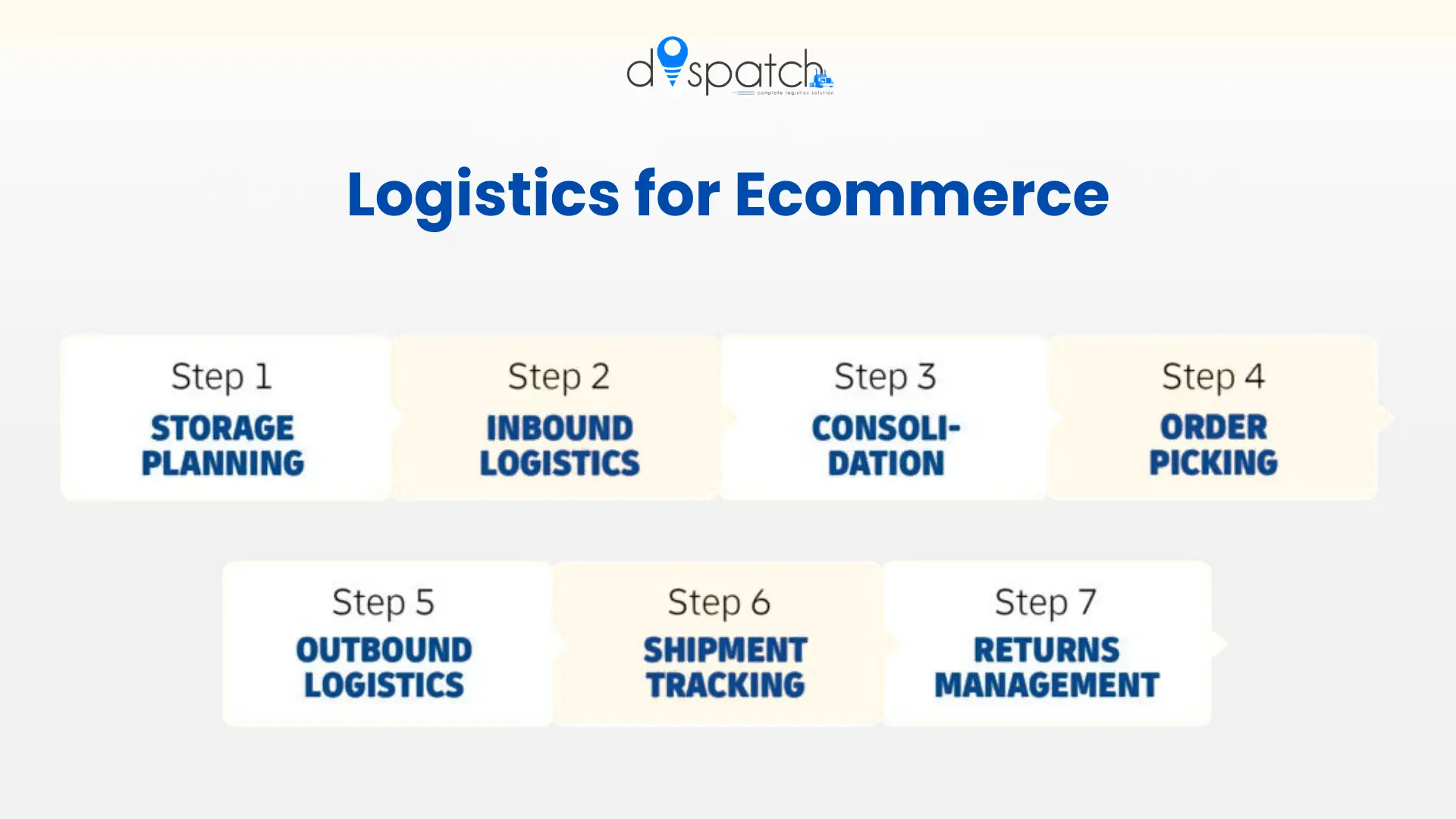
The typical workflow includes:
Products arrive from suppliers.
Inventory is inspected.
Products are stored.
Orders are received.
Warehouse staff pick products.
Orders are packed.
Parcels are shipped.
Customers receive deliveries.
Returns are processed if necessary.
Key Components of Warehousing and Logistics for Ecommerce
Inventory Management
Inventory management helps businesses know:
Current stock levels
Best-selling products
Slow-moving items
Reorder points
Warehouse capacity
Accurate inventory reduces overselling and stockouts.
Warehouse Storage
Products should be organized using systematic storage methods.
Common storage systems include:
Shelving
Racking
Bin storage
Pallet storage
Proper organization speeds up picking and packing.
Order Processing
Once customers place orders:
Orders enter the warehouse system.
Staff locate products.
Items are verified.
Orders are packed.
Shipping labels are generated.
Fast processing improves delivery speed.
Picking Operations
Efficient picking methods include:
Single Order Picking
Suitable for low order volumes.
Batch Picking
Multiple similar orders are picked together.
Zone Picking
Employees work within designated warehouse zones.
Wave Picking
Orders are grouped by shipping schedules.
Packing
Proper packing protects products during transportation.
Packing materials include:
Corrugated boxes
Bubble wrap
Air pillows
Packing paper
Tape
Labels
Good packaging reduces damage during transit.
Shipping
Shipping connects warehouses with customers.
Businesses often choose among:
Standard delivery
Express shipping
Next-day delivery
The right shipping strategy improves customer satisfaction.
Reverse Logistics
Returns are inevitable in ecommerce.
Reverse logistics involves:
Product returns
Inspection
Refund processing
Replacement
Restocking
Disposal of damaged products
An efficient returns process builds customer trust.
Types of Ecommerce Warehouses
Private Warehouses
Owned by businesses.
Advantages:
Full control
Customized operations
Better security
Public Warehouses
Shared facilities rented by multiple companies.
Advantages:
Lower investment
Flexible space
Reduced operating costs
Fulfillment Centers
Designed specifically for ecommerce.
They handle:
Storage
Picking
Packing
Shipping
Returns
Distribution Centers
Focus on rapid inventory movement rather than long-term storage.
On-Demand Warehouses
Businesses rent warehouse space based on seasonal demand.
Ideal for:
Festive sales
Flash sales
Promotional campaigns
Benefits of Warehousing and Logistics for Ecommerce
Faster Deliveries
Strategically located warehouses reduce delivery times.
Customers increasingly expect:
Same-day delivery
Next-day delivery
Two-day shipping
Improved Customer Satisfaction
Fast deliveries and accurate orders lead to:
Better reviews
Repeat purchases
Increased loyalty
Lower Shipping Costs
Regional warehouses reduce transportation expenses.
Businesses can:
Optimize routes
Reduce fuel costs
Lower courier charges
Better Inventory Visibility
Real-time inventory tracking enables smarter purchasing decisions.
Businesses know:
Available stock
Incoming inventory
Reserved inventory
Damaged goods
Increased Sales
Products available for immediate shipment encourage higher conversion rates.
Reduced Errors
Automation minimizes:
Wrong shipments
Missing products
Duplicate orders
Business Scalability
Efficient warehousing supports business growth without operational chaos.
Common Challenges in Warehousing and Logistics for Ecommerce
Inventory Inaccuracy
Incorrect inventory leads to:
Overselling
Customer complaints
Order cancellations
Seasonal Demand
Festive seasons create sudden order spikes.
Warehouses must prepare for:
Increased inventory
Additional staff
Faster processing
Rising Shipping Costs
Fuel prices and transportation expenses continue to increase.
Businesses must optimize logistics to remain profitable.
Order Returns
Returns increase operational costs.
Effective reverse logistics minimizes losses.
Labor Shortages
Finding skilled warehouse workers can be challenging during peak seasons.
Automation helps reduce dependency on manual labor.
Technology in Warehousing and Logistics for Ecommerce
Modern ecommerce warehouses rely heavily on technology.
Warehouse Management System (WMS)
A WMS helps manage:
Inventory
Storage locations
Picking
Packing
Shipping
Barcode Scanning
Barcodes improve:
Inventory accuracy
Faster picking
Error reduction
RFID Technology
RFID enables real-time inventory tracking without manual scanning.
Automation
Automated systems include:
Conveyor belts
Sorting systems
Robotic picking
Automated storage systems
Automation increases productivity.
Artificial Intelligence
AI helps predict:
Customer demand
Inventory requirements
Shipping delays
Warehouse optimization
Data Analytics
Analytics provide insights into:
Order trends
Inventory turnover
Warehouse performance
Shipping efficiency
Best Practices for Warehousing and Logistics for Ecommerce
Organize Inventory Logically
Group products based on:
Sales volume
Product category
Size
Weight
Frequently sold products should remain easily accessible.
Maintain Inventory Accuracy
Regular stock audits help identify discrepancies before they become costly.
Use Multiple Warehouses
Regional warehouses shorten delivery times.
Customers receive products faster.
Automate Repetitive Tasks
Automation reduces:
Manual errors
Labor costs
Processing time
Optimize Packaging
Packaging should balance:
Protection
Weight
Shipping cost
Sustainability
Track Key Performance Indicators
Important warehouse metrics include:
Order accuracy
Picking speed
Inventory turnover
Shipping time
Return rate
Importance of Last-Mile Delivery
Last-mile delivery represents the final stage of logistics.
It significantly affects:
Customer experience
Delivery speed
Shipping costs
Efficient last-mile delivery improves customer retention.
Sustainable Warehousing
Sustainability has become essential.
Businesses now adopt:
Eco-friendly packaging
Energy-efficient warehouses
Solar power
Electric delivery vehicles
Recyclable materials
Sustainable logistics also enhance brand reputation.
Role of Third-Party Logistics (3PL)
Many ecommerce businesses outsource logistics to third-party providers.
Benefits include:
Lower operational costs
Faster expansion
Professional expertise
Better technology
Nationwide delivery networks
3PL providers allow businesses to focus on marketing and product development.
Choosing the Right Warehousing and Logistics Partner
When selecting a logistics partner, consider:
Technology
Choose providers offering:
Real-time tracking
Inventory management
API integrations
Automated reporting
Warehouse Network
Multiple warehouse locations reduce delivery times.
Delivery Coverage
Ensure nationwide service coverage.
Customer Support
Responsive support quickly resolves shipping issues.
Scalability
Your logistics partner should grow alongside your business.
Future Trends in Warehousing and Logistics for Ecommerce
The future of ecommerce logistics will include:
AI-powered inventory forecasting
Autonomous warehouse robots
Drone deliveries
Smart warehouses
Internet of Things (IoT)
Predictive analytics
Sustainable logistics
Hyperlocal fulfillment
Same-day delivery expansion
Fully automated fulfillment centers
Businesses adopting these technologies will remain competitive.
Tips for Small Ecommerce Businesses
If you're starting an online store:
Begin with organized inventory management.
Invest in warehouse software early.
Forecast demand accurately.
Optimize packaging.
Choose reliable courier partners.
Monitor inventory daily.
Track logistics performance.
Maintain safety stock.
Improve return handling.
Continuously optimize warehouse operations.
These practices help build a scalable ecommerce business.
Conclusion
Efficient warehousing and logistics for ecommerce are essential for delivering exceptional customer experiences and achieving sustainable business growth. From inventory management and warehouse organization to order fulfillment, shipping, and returns, every stage of the logistics process contributes to operational success.
Businesses that invest in modern warehouse technology, automation, data-driven inventory management, and reliable logistics networks gain a significant competitive advantage. Faster deliveries, lower operational costs, improved accuracy, and higher customer satisfaction all stem from a well-optimized fulfillment system.
As ecommerce continues to evolve, adopting innovative warehousing solutions, leveraging automation, and building resilient logistics strategies will become increasingly important. Whether you operate a small online store or a large ecommerce enterprise, optimizing your warehousing and logistics for ecommerce can help you scale efficiently, delight customers, and thrive in an increasingly competitive marketplace.
Frequently Asked Questions (FAQs)
Que: What is warehousing and logistics for ecommerce?
Ans: Warehousing and logistics for ecommerce refers to the process of storing inventory, managing stock, fulfilling customer orders, shipping products, and handling returns efficiently to ensure timely and accurate deliveries.
Que: Why is warehousing important for ecommerce businesses?
Ans: Warehousing helps organize inventory, improve order accuracy, reduce shipping times, lower operational costs, and enhance customer satisfaction by ensuring products are readily available for fulfillment.
Que: What is the difference between warehousing and logistics?
Ans: Warehousing focuses on storing and managing inventory, while logistics involves transporting products, managing the supply chain, fulfilling orders, and delivering goods to customers.
Que: How can ecommerce businesses improve their logistics operations?
Ans: Businesses can improve logistics by using warehouse management systems, automating order processing, optimizing inventory, partnering with reliable logistics providers, and tracking key performance metrics.
Que: What are the benefits of outsourcing ecommerce logistics?
Ans: Outsourcing logistics to a third-party provider can reduce operational costs, improve delivery speed, provide access to advanced technology, simplify inventory management, and allow businesses to focus on growth and customer acquisition.