Introduction
In today’s competitive business environment, supply chain logistics plays a crucial role in ensuring products move efficiently from manufacturers to customers. Whether a company operates in ecommerce, retail, manufacturing, healthcare, or food distribution, effective logistics management directly impacts customer satisfaction, profitability, and business growth.
The modern market demands faster deliveries, accurate inventory management, cost-effective transportation, and seamless coordination between suppliers, warehouses, and delivery networks. Businesses that invest in efficient supply chain logistics systems gain a major advantage over competitors because they can reduce delays, lower operational costs, and improve overall service quality.
From sourcing raw materials to delivering finished products, supply chain logistics connects every stage of the supply chain. It involves planning, implementing, and controlling the movement and storage of goods, services, and information. Companies around the world are continuously upgrading their logistics operations with advanced technologies, automation, and data analytics to meet increasing customer expectations.
This comprehensive guide explains everything about supply chain logistics, including its components, importance, benefits, challenges, technologies, strategies, and future trends.
What is Supply Chain Logistics?
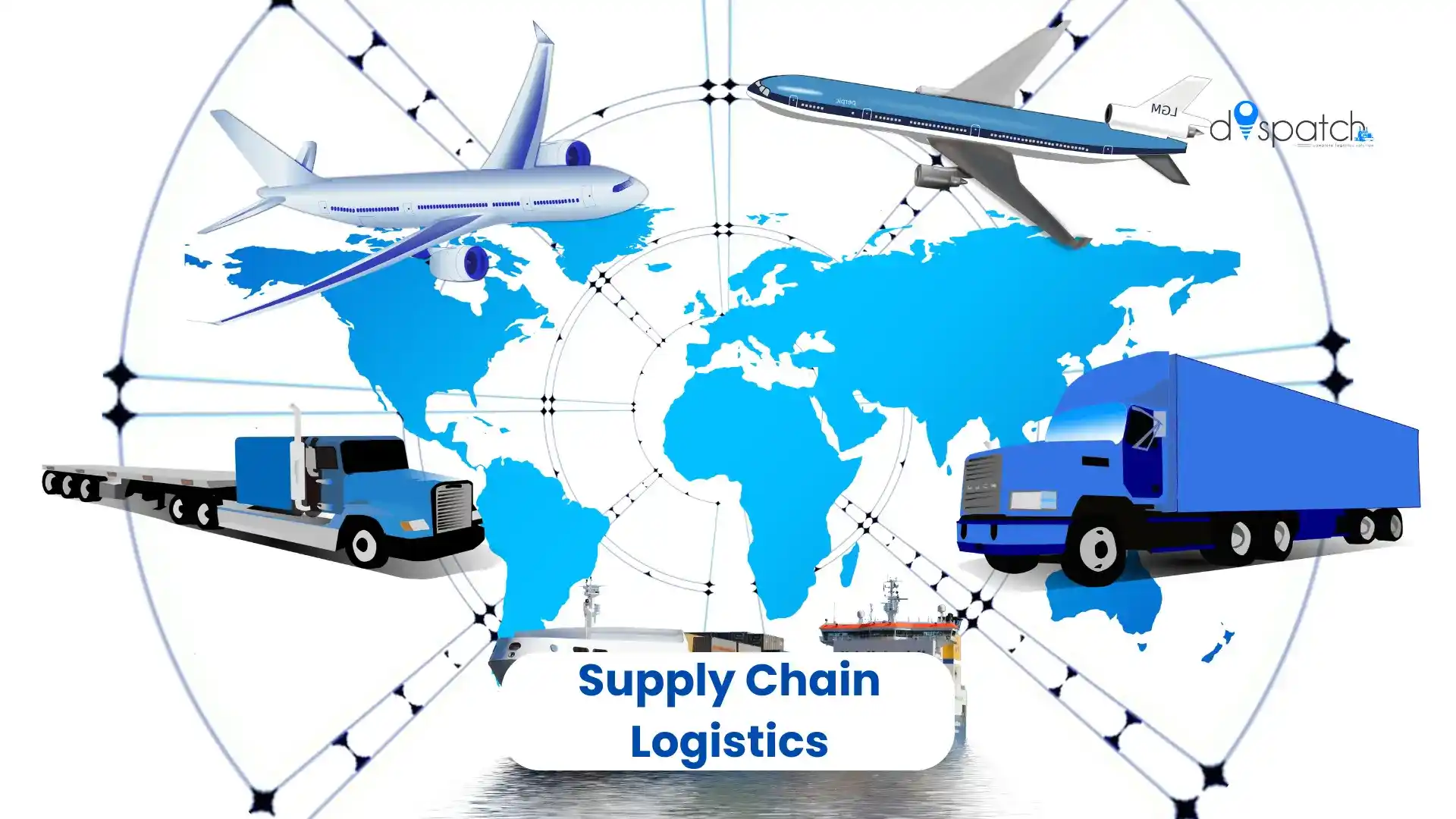
Supply chain logistics refers to the process of managing the transportation, storage, and flow of goods from suppliers to manufacturers, warehouses, distributors, retailers, and customers. It is a vital part of supply chain management that focuses on operational efficiency and timely product delivery.
The goal of supply chain logistics is to ensure the right products reach the right place at the right time while minimizing costs and maximizing efficiency.
The process includes:
Procurement of raw materials
Inventory management
Warehousing
Transportation
Order fulfillment
Distribution
Delivery management
Reverse logistics
Efficient supply chain logistics ensures smooth coordination between all parties involved in the supply chain ecosystem.
Importance of Supply Chain Logistics
Improves Customer Satisfaction
Customers expect fast and reliable deliveries. Efficient logistics operations ensure timely order fulfillment and accurate deliveries, leading to better customer experiences and higher retention rates.
Reduces Operational Costs
Optimized transportation routes, warehouse management, and inventory control help businesses lower logistics expenses and improve profit margins.
Enhances Inventory Management
Proper supply chain logistics minimizes overstocking and stock shortages. Businesses can maintain optimal inventory levels and reduce storage costs.
Supports Business Growth
As businesses expand into new markets, logistics systems help manage increasing order volumes and geographic distribution efficiently.
Increases Supply Chain Visibility
Modern logistics technologies provide real-time tracking and analytics, enabling businesses to monitor shipments and make informed decisions.
Boosts Competitive Advantage
Companies with strong logistics capabilities can deliver products faster and more efficiently than competitors.
Key Components of Supply Chain Logistics
Procurement
Procurement involves sourcing raw materials, products, or components from suppliers. Effective procurement strategies ensure businesses obtain quality products at competitive prices.
Important Procurement Activities
Supplier selection
Vendor management
Purchase planning
Contract negotiation
Demand forecasting
Inventory Management
Inventory management is essential for maintaining the right stock levels. Businesses must balance inventory availability with storage costs.
Benefits of Efficient Inventory Management
Reduced stock shortages
Lower warehousing costs
Improved order accuracy
Better cash flow management
Modern businesses use inventory management software to monitor stock levels in real time.
Warehousing
Warehousing involves storing products before distribution or delivery. Efficient warehouse operations improve order processing speed and inventory accuracy.
Types of Warehouses
Distribution centers
Fulfillment centers
Cold storage warehouses
Bonded warehouses
Smart warehouses
Warehouse Operations Include
Receiving inventory
Product storage
Picking and packing
Shipping coordination
Returns management
Automation and robotics are transforming modern warehouse operations.
Transportation
Transportation is one of the most important elements of supply chain logistics. It involves moving goods between locations efficiently and cost-effectively.
Transportation Modes
Road Transportation
Used for local and regional deliveries. Flexible and suitable for last-mile logistics.
Rail Transportation
Cost-effective for bulk shipments over long distances.
Air Freight
Fast but expensive. Ideal for urgent or high-value shipments.
Sea Freight
Economical for international shipping and large cargo volumes.
Multimodal Transportation
Combines multiple transport methods to optimize efficiency and cost.
Order Fulfillment
Order fulfillment includes receiving customer orders, processing them, packing products, and shipping them to customers.
Efficient Fulfillment Requires
Accurate inventory data
Fast picking and packing
Reliable shipping partners
Delivery tracking systems
Fast order fulfillment improves customer satisfaction and repeat purchases.
Distribution
Distribution ensures products reach retailers, wholesalers, or end customers efficiently.
Distribution Strategies
Direct distribution
Indirect distribution
Intensive distribution
Exclusive distribution
Selective distribution
Businesses choose distribution methods based on product type and target market.
Reverse Logistics
Reverse logistics involves handling product returns, recycling, repairs, and disposal.
Importance of Reverse Logistics
Improves customer trust
Supports sustainability
Reduces waste
Recovers product value
Reverse logistics has become increasingly important in ecommerce and retail industries.
Types of Supply Chain Logistics
Inbound Logistics
Inbound logistics focuses on receiving raw materials or products from suppliers.
Activities Include
Supplier coordination
Transportation planning
Receiving shipments
Inventory storage
Efficient inbound logistics ensures uninterrupted production and operations.
Outbound Logistics
Outbound logistics manages the movement of finished products from warehouses to customers.
Activities Include
Order processing
Packaging
Shipping
Delivery management
Strong outbound logistics improves delivery speed and customer satisfaction.
Third-Party Logistics (3PL)
3PL providers manage logistics functions for businesses, including warehousing, transportation, and fulfillment.
Benefits of 3PL Services
Reduced operational costs
Access to logistics expertise
Scalability
Faster deliveries
Many ecommerce businesses rely on 3PL providers for nationwide distribution.
Fourth-Party Logistics (4PL)
4PL providers oversee the entire supply chain process and coordinate multiple logistics partners.
Advantages of 4PL
End-to-end supply chain management
Better efficiency
Advanced analytics
Improved coordination
Role of Technology in Supply Chain Logistics
Technology has revolutionized supply chain logistics by improving visibility, automation, and efficiency.
Warehouse Management Systems (WMS)
WMS software helps businesses manage warehouse operations, inventory, and order fulfillment.
Benefits
Faster order processing
Improved accuracy
Reduced labor costs
Transportation Management Systems (TMS)
TMS software optimizes transportation planning and shipment tracking.
Key Features
Route optimization
Freight management
Delivery tracking
Carrier management
Artificial Intelligence (AI)
AI helps businesses analyze logistics data and improve decision-making.
AI Applications in Logistics
Demand forecasting
Route optimization
Predictive maintenance
Automated customer support
Internet of Things (IoT)
IoT devices provide real-time visibility into supply chain operations.
IoT Applications
Fleet tracking
Temperature monitoring
Asset management
Smart warehouses
Blockchain Technology
Blockchain improves transparency and security in supply chain transactions.
Benefits
Enhanced traceability
Reduced fraud
Better compliance
Secure data sharing
Robotics and Automation
Automation improves warehouse efficiency and reduces manual labor.
Examples
Automated guided vehicles
Robotic picking systems
Conveyor systems
Automated sorting
Benefits of Effective Supply Chain Logistics
Faster Deliveries
Efficient logistics networks reduce transit times and improve customer experiences.
Lower Costs
Optimized transportation and inventory management help reduce operating expenses.
Better Inventory Control
Businesses can maintain optimal stock levels and avoid inventory shortages.
Increased Productivity
Automation and streamlined processes improve workforce efficiency.
Enhanced Customer Experience
Reliable deliveries and accurate order fulfillment build customer trust.
Improved Scalability
Businesses can handle increasing order volumes without operational disruptions.
Stronger Supplier Relationships
Efficient coordination improves communication and supplier performance.
Challenges in Supply Chain Logistics
Rising Transportation Costs
Fuel prices, labor costs, and shipping expenses continue to increase globally.
Supply Chain Disruptions
Natural disasters, geopolitical tensions, and pandemics can interrupt logistics operations.
Inventory Management Issues
Poor forecasting can lead to excess inventory or stock shortages.
Last-Mile Delivery Challenges
Urban congestion and delivery delays affect customer satisfaction.
Regulatory Compliance
Businesses must comply with transportation, customs, and environmental regulations.
Labor Shortages
Many logistics companies face shortages of drivers and warehouse workers.
Cybersecurity Risks
Digital logistics systems are vulnerable to cyberattacks and data breaches.
Supply Chain Logistics in Ecommerce
Ecommerce growth has significantly increased the importance of supply chain logistics.
Key Ecommerce Logistics Functions
Inventory storage
Order processing
Packaging
Shipping
Returns management
Ecommerce Logistics Challenges
High return volumes
Seasonal demand fluctuations
Multi-channel fulfillment
Strategies for Ecommerce Success
Use fulfillment centers
Implement automation
Optimize inventory placement
Offer real-time tracking
Efficient ecommerce logistics improves delivery speed and customer loyalty.
Sustainable Supply Chain Logistics
Sustainability is becoming a major priority for businesses worldwide.
Green Logistics Practices
Route Optimization
Reducing fuel consumption through efficient delivery routes.
Electric Vehicles
Using electric delivery vehicles to reduce carbon emissions.
Eco-Friendly Packaging
Reducing packaging waste and using recyclable materials.
Energy-Efficient Warehouses
Implementing solar energy and smart lighting systems.
Reverse Logistics
Encouraging recycling and product reuse.
Sustainable logistics not only helps the environment but also improves brand reputation.
Importance of Data Analytics in Supply Chain Logistics
Data analytics helps businesses make informed decisions and improve logistics performance.
Benefits of Logistics Analytics
Better demand forecasting
Reduced transportation costs
Improved delivery performance
Inventory optimization
Risk management
Types of Analytics Used
Descriptive analytics
Predictive analytics
Prescriptive analytics
Real-time analytics
Businesses that use data-driven logistics strategies gain a competitive advantage.
Supply Chain Logistics Strategies
Lean Logistics
Lean logistics focuses on reducing waste and improving efficiency.
Goals
Lower costs
Faster processes
Improved productivity
Agile Logistics
Agile logistics helps businesses respond quickly to changing market demands.
Features
Flexible transportation
Rapid fulfillment
Real-time decision-making
Just-in-Time (JIT) Logistics
JIT logistics minimizes inventory storage by receiving goods only when needed.
Benefits
Reduced storage costs
Lower inventory waste
Better cash flow
However, JIT systems can be vulnerable to supply chain disruptions.
Omnichannel Logistics
Omnichannel logistics supports multiple sales channels, including online stores, retail outlets, and marketplaces.
Key Requirements
Integrated inventory systems
Unified order management
Flexible fulfillment
Future Trends in Supply Chain Logistics
Automation and Robotics
Automation will continue transforming warehouses and transportation systems.
Artificial Intelligence Expansion
AI-powered forecasting and route optimization will become more advanced.
Drone Deliveries
Drone technology may improve last-mile delivery efficiency in certain regions.
Autonomous Vehicles
Self-driving trucks could reduce transportation costs in the future.
Hyperlocal Deliveries
Businesses are increasingly focusing on faster local deliveries.
Real-Time Visibility
Advanced tracking technologies will improve shipment transparency.
Sustainable Logistics Growth
Eco-friendly logistics practices will become standard across industries.
Supply Chain Logistics in Different Industries
Retail Industry
Retail businesses rely heavily on logistics for inventory replenishment and customer deliveries.
Key Focus Areas
Fast shipping
Inventory accuracy
Seasonal demand management
Healthcare Industry
Healthcare logistics requires precise handling and temperature-controlled transportation.
Critical Requirements
Cold chain logistics
Regulatory compliance
Emergency deliveries
Manufacturing Industry
Manufacturers depend on efficient inbound logistics for raw materials and outbound logistics for finished goods.
Important Factors
Production scheduling
Supplier coordination
Inventory planning
Food and Beverage Industry
Food logistics requires strict temperature control and quick deliveries.
Challenges
Perishable inventory
Food safety regulations
Cold storage management
How Businesses Can Improve Supply Chain Logistics
Invest in Technology
Using advanced logistics software improves visibility and operational efficiency.
Optimize Transportation Routes
Route planning reduces fuel costs and delivery delays.
Improve Supplier Collaboration
Strong communication with suppliers enhances reliability.
Use Automation
Automation reduces manual errors and increases productivity.
Monitor Key Performance Indicators (KPIs)
Tracking logistics metrics helps identify operational improvements.
Common Logistics KPIs
Delivery accuracy
Order fulfillment rate
Transportation costs
Inventory turnover
Warehouse efficiency
Build Flexible Supply Chains
Businesses should prepare contingency plans for disruptions.
Role of Warehousing in Supply Chain Logistics
Warehousing is more than just storing inventory. Modern warehouses function as strategic distribution hubs.
Benefits of Smart Warehousing
Faster order processing
Reduced labor costs
Better inventory visibility
Improved customer satisfaction
Technologies Used in Smart Warehouses
Barcode scanning
RFID systems
Robotics
Automated storage systems
Warehousing efficiency directly impacts overall logistics performance.
Last-Mile Delivery in Supply Chain Logistics
Last-mile delivery refers to the final stage of the delivery process when goods reach customers.
Importance of Last-Mile Delivery
Directly impacts customer satisfaction
Influences brand reputation
Affects delivery costs
Challenges
Traffic congestion
Failed deliveries
High operational costs
Solutions
Route optimization software
Local fulfillment centers
Delivery tracking systems
Global Supply Chain Logistics
Globalization has expanded international trade and increased the complexity of logistics operations.
Key Components of Global Logistics
Customs clearance
International shipping
Freight forwarding
Trade compliance
Challenges in Global Logistics
Currency fluctuations
Political instability
International regulations
Port congestion
Businesses involved in international trade must develop robust global logistics strategies.
Supply Chain Risk Management
Risk management is essential for maintaining stable logistics operations.
Common Risks
Supplier failures
Transportation delays
Cybersecurity threats
Natural disasters
Risk Mitigation Strategies
Diversify suppliers
Maintain safety stock
Use predictive analytics
Implement cybersecurity measures
Companies with strong risk management systems recover faster from disruptions.
Importance of Customer Experience in Supply Chain Logistics
Modern customers expect transparency, speed, and reliability.
Ways Logistics Improves Customer Experience
Faster shipping
Accurate deliveries
Easy return processes
Customer-focused logistics strategies help businesses build long-term loyalty.
Supply Chain Logistics and Business Profitability
Efficient logistics operations significantly impact profitability.
Profitability Drivers
Reduced transportation costs
Lower inventory holding costs
Improved delivery performance
Increased customer retention
Businesses that optimize logistics operations often achieve higher revenue growth.
Conclusion
Supply chain logistics is the backbone of modern business operations. It connects suppliers, manufacturers, warehouses, distributors, and customers through an organized network that ensures smooth product movement and efficient order fulfillment.
As customer expectations continue to rise, businesses must invest in advanced logistics technologies, automation, sustainability initiatives, and data-driven decision-making. Efficient supply chain logistics improves delivery speed, reduces costs, enhances customer satisfaction, and supports long-term business growth.
Whether operating in ecommerce, manufacturing, healthcare, retail, or global trade, companies that prioritize logistics efficiency gain a strong competitive advantage in the marketplace. By adopting innovative strategies and continuously improving logistics operations, businesses can build resilient supply chains capable of handling future challenges and opportunities.
FAQs
Que: What is supply chain logistics?
Ans: Supply chain logistics is the process of managing the movement, storage, and delivery of goods from suppliers to customers efficiently and cost-effectively.
Que: Why is supply chain logistics important?
Ans: Supply chain logistics helps businesses reduce costs, improve delivery speed, manage inventory efficiently, and enhance customer satisfaction.
Que: What are the main components of supply chain logistics?
Ans: The main components include procurement, inventory management, warehousing, transportation, order fulfillment, distribution, and reverse logistics.
Que: How does technology improve supply chain logistics?
Ans: Technology improves logistics through automation, real-time tracking, data analytics, warehouse management systems, and transportation optimization.
Que: What are the biggest challenges in supply chain logistics?
Ans: Major challenges include rising transportation costs, supply chain disruptions, inventory issues, labor shortages, and last-mile delivery complexities.