Introduction
Businesses today need more than simply a place to store products. Efficient warehousing has become an essential part of supply chain management, especially for companies handling growing inventory volumes, serving multiple markets, or operating an e-commerce business.
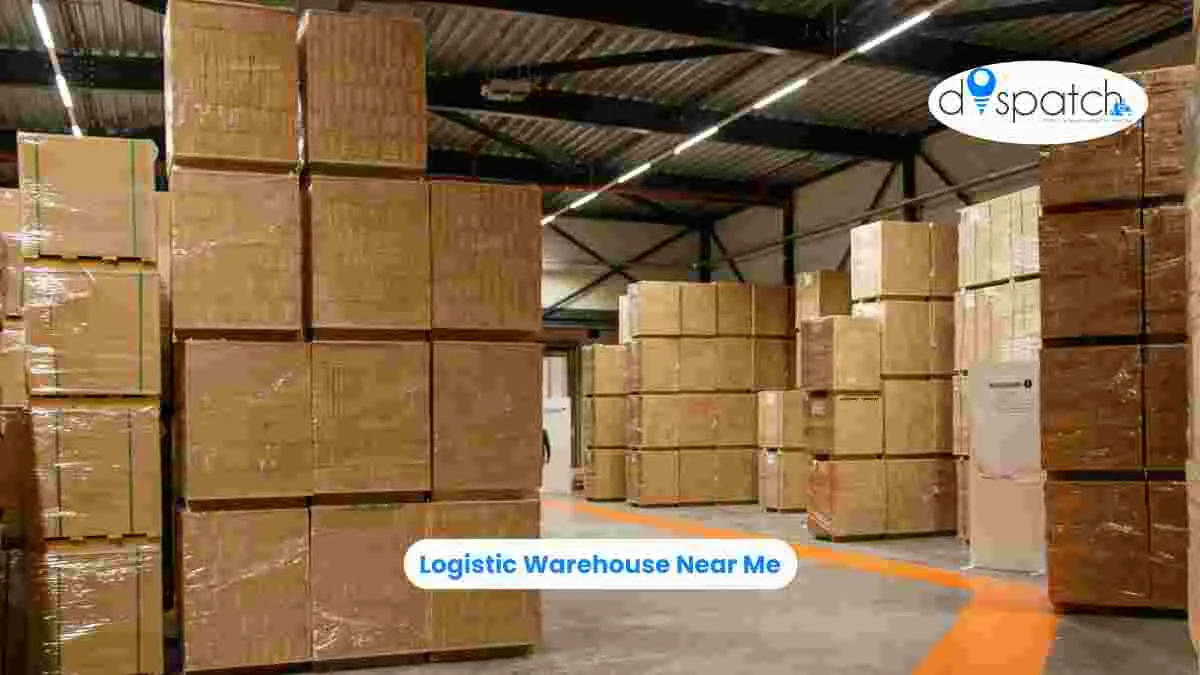
When business owners search for a logistic warehouse near me, they are often looking for a facility that can do much more than store cartons and pallets. A modern logistics warehouse may provide inventory management, order fulfillment, packaging, transportation coordination, cross-docking, reverse logistics, and technology-enabled shipment tracking.
Choosing a warehouse close to suppliers, customers, transportation hubs, or major markets can have a significant impact on logistics costs and delivery performance. A strategically located warehouse can reduce transportation distances, shorten delivery times, and make inventory easier to manage.
However, proximity alone should not determine the right warehouse. Businesses must also consider storage capacity, services, technology, security, accessibility, pricing, scalability, and the specific requirements of their products.
This guide explains what businesses should know when searching for a logistic warehouse near me, how logistics warehouses work, the services they provide, their benefits, costs, selection criteria, and the role of technology in modern warehousing.
What Is a Logistic Warehouse?
A logistics warehouse is a facility designed to receive, store, manage, process, and distribute goods.
Traditional warehouses were primarily associated with storage. Modern logistics warehouses, however, often perform several interconnected supply chain functions.
A warehouse may receive products from manufacturers or suppliers, organize inventory, process customer orders, prepare shipments, and coordinate deliveries.
Some facilities also offer specialized services such as:
Inventory management
Order fulfillment
Product labeling
Packaging
Kitting
Palletization
Cross-docking
Returns processing
Quality inspection
Transportation coordination
Distribution
This makes the warehouse an active part of the supply chain rather than simply a storage location.
Why Search for a "Logistic Warehouse Near Me"?
The phrase logistic warehouse near me reflects an important logistics consideration: location.
A warehouse located close to a company's customers or distribution markets can reduce transportation distances and potentially improve delivery times.
For example, an e-commerce company serving customers in a particular region may benefit from storing inventory within or near that market rather than shipping every order from a distant location.
Similarly, a manufacturer may prefer a warehouse near its production facility to simplify the movement of raw materials and finished goods.
When evaluating warehouse locations, businesses should consider:
Distance from customers
Distance from suppliers
Proximity to highways
Access to airports
Access to ports
Access to railway networks
Local transportation availability
Traffic conditions
Labor availability
Operating costs
Future expansion opportunities
The nearest warehouse is not always the best warehouse. The objective should be to find the right warehouse in the right strategic location.
Importance of Warehouse Location
Location can influence both transportation costs and customer service.
Suppose two warehouses offer similar storage services. One is slightly cheaper but located far from the primary customer base. The other is closer to major delivery areas but has a moderately higher storage charge.
The second facility could still be more economical overall if it significantly reduces transportation costs and delivery times.
A good warehouse location can support:
Faster Deliveries
Shorter distances between inventory and customers can make faster delivery possible.
Lower Transportation Costs
Reduced travel distances can potentially lower fuel consumption and transportation expenses.
Better Inventory Availability
Inventory positioned near important markets can be replenished more efficiently.
Improved Customer Experience
Faster and more predictable delivery can improve customer satisfaction.
Better Supply Chain Responsiveness
Businesses can respond more quickly to changes in demand when inventory is strategically positioned.
Types of Logistic Warehouses
Businesses searching for a logistic warehouse near me may encounter several types of facilities.
Distribution Centers
Distribution centers are designed primarily for receiving, processing, and distributing products.
They often handle high inventory turnover and large shipment volumes.
Unlike traditional storage warehouses, distribution centers may move products through the facility relatively quickly.
Fulfillment Centers
Fulfillment centers are particularly important for e-commerce.
They receive inventory, store products, process customer orders, pick items, pack them, and prepare them for shipment.
A fulfillment center can allow an online retailer to outsource many operational activities.
Cold Storage Warehouses
Cold storage facilities are designed for temperature-sensitive products.
They may serve industries such as:
Food and beverages
Pharmaceuticals
Healthcare
Agriculture
Certain chemical products
Temperature requirements can vary significantly depending on the product.
Bonded Warehouses
Bonded warehouses are specialized facilities that can store certain imported goods under applicable customs arrangements.
Businesses involved in international trade may use such facilities depending on their regulatory and operational requirements.
General Warehouses
General warehouses provide standard storage for products that do not require specialized environmental conditions.
They may accommodate cartons, pallets, equipment, raw materials, and finished goods.
Automated Warehouses
Automated warehouses use technologies such as conveyors, automated storage and retrieval systems, robotics, scanners, and warehouse management software.
Automation can improve productivity and inventory accuracy in suitable operations.
Services Offered by Modern Logistic Warehouses
When searching for a logistic warehouse near me, businesses should examine the complete range of services rather than focusing only on storage.
Storage
Storage is the most basic warehouse service.
Goods can be stored using:
Pallet racks
Shelving
Bins
Floor storage
Specialized storage systems
The appropriate system depends on product characteristics and inventory volume.
Inventory Management
Inventory management involves monitoring stock levels, locations, movement, and availability.
Technology can provide businesses with greater visibility into warehouse inventory.
Accurate inventory information helps reduce stockouts, overstocking, and misplaced products.
Order Fulfillment
Fulfillment involves processing customer orders from receipt to shipment.
The process may include:
Receiving the order
Locating inventory
Picking products
Checking quantities
Packing products
Generating shipping documentation
Handing the shipment to a carrier
Efficient fulfillment is particularly important for e-commerce businesses.
Packaging
Some logistics warehouses offer packaging services.
These may include standard packaging, customized packaging, labeling, protective materials, and shipment preparation.
Outsourcing packaging can help businesses avoid investing in additional facilities and labor.
Kitting
Kitting involves combining multiple individual products into a predefined package or kit.
For example, a business selling promotional kits may store individual items at a warehouse and have the warehouse assemble them into complete kits when required.
Cross-Docking
Cross-docking reduces the amount of time products spend in storage.
Incoming goods are received and transferred directly to outgoing transportation with minimal storage.
This approach can be useful for products that need rapid movement through the supply chain.
Reverse Logistics
Returns are an increasingly important part of e-commerce and retail.
A warehouse offering reverse logistics may receive returned products, inspect them, classify their condition, restock eligible products, and coordinate further processing.
Warehouse Management Systems
A modern warehouse often relies on a Warehouse Management System, commonly called a WMS.
A WMS is software designed to manage warehouse operations.
It can help track:
Product locations
Inventory quantities
Incoming shipments
Outgoing orders
Picking activities
Packing
Stock movements
Returns
A good WMS can improve inventory accuracy and provide businesses with greater operational visibility.
Technology in Modern Warehousing
Technology is transforming warehouse operations.
Businesses looking for a logistic warehouse near me should ask what technologies the facility uses.
Barcode Scanning
Barcode scanners allow warehouse staff to identify products quickly and accurately.
RFID
Radio-frequency identification can enable automated identification and tracking of tagged products.
Warehouse Automation
Automated systems can move products within facilities and reduce repetitive manual work.
Robotics
Robotic systems may assist with picking, sorting, transportation, and other warehouse tasks.
Real-Time Inventory Visibility
Digital systems can provide current information about inventory levels and warehouse activity.
Data Analytics
Warehouse data can help businesses identify trends, bottlenecks, slow-moving products, and opportunities for operational improvement.
Benefits of Using a Nearby Logistic Warehouse
Using a strategically located warehouse can provide several advantages.
Reduced Delivery Times
Inventory positioned closer to customers can support faster delivery.
Lower Transportation Costs
Shorter routes can reduce transportation expenses in some situations.
Better Regional Distribution
Businesses can use regional warehouses to serve different customer markets.
Improved Inventory Positioning
Stock can be distributed according to regional demand.
Easier Transportation Coordination
A warehouse near major transportation routes can simplify inbound and outbound logistics.
Greater Customer Satisfaction
Faster and more reliable delivery can improve the customer experience.
Logistic Warehousing for E-Commerce Businesses
E-commerce has significantly increased demand for flexible warehousing.
Online businesses may receive hundreds or thousands of orders from customers located in different regions.
Maintaining all inventory in one location can result in longer delivery distances for some customers.
A regional warehousing strategy can place inventory closer to important customer markets.
For example, an e-commerce company serving several major cities might use multiple fulfillment locations.
The exact strategy depends on order volumes, product characteristics, transportation costs, and customer expectations.
How a Logistic Warehouse Supports Order Fulfillment
A typical fulfillment process can be divided into several stages.
Receiving
Products arrive from manufacturers, suppliers, or other warehouses.
Warehouse employees or automated systems verify the incoming shipment.
Put-Away
Products are assigned storage locations.
The warehouse management system records their locations.
Storage
Products remain in designated locations until an order is received.
Picking
When a customer places an order, warehouse workers or automated systems retrieve the required items.
Packing
The products are checked and packaged appropriately.
Dispatch
The completed order is handed over to the transportation provider.
Delivery
The shipment travels to the customer.
An efficient warehouse can improve every stage of this process.
Factors to Consider When Choosing a Logistic Warehouse Near Me
Location is important, but businesses should evaluate several additional factors.
Location and Accessibility
Consider the warehouse's proximity to:
Major highways
Customers
Suppliers
Ports
Airports
Railway stations
Distribution routes
A facility that is easy for trucks to access may provide operational advantages.
Storage Capacity
Make sure the warehouse has enough capacity for current inventory and expected growth.
Businesses should consider both current requirements and future demand.
Warehouse Layout
An efficient layout can improve movement, picking, storage, and loading.
Poorly designed facilities may increase handling time.
Security
Warehouse security should be evaluated carefully.
Potential measures include:
CCTV
Access control
Security personnel
Alarm systems
Visitor management
Fire protection
The appropriate security requirements depend on the products being stored.
Technology
Ask whether the facility uses a WMS, barcode scanning, inventory dashboards, automated alerts, or other digital tools.
Staffing
Adequate staffing is important for receiving, picking, packing, inventory management, and dispatch operations.
Scalability
Your warehouse requirements may change as the business grows.
A suitable provider should be capable of supporting increased volumes where possible.
Operating Hours
Some businesses require extended or flexible warehouse operating hours.
Check whether the facility's schedule aligns with your supply chain requirements.
Value-Added Services
Consider whether you need services beyond storage, such as packaging, labeling, kitting, or returns processing.
Pricing
Compare total costs rather than looking only at the headline storage rate.
Understanding Logistic Warehouse Costs
Warehouse pricing can vary depending on location, facility type, services, and inventory requirements.
Common cost components can include:
Storage charges
Receiving charges
Picking fees
Packing fees
Loading and unloading
Inventory handling
Transportation
Packaging materials
Returns processing
Value-added services
Technology or account fees
Some providers charge by pallet, cubic volume, square foot, order, item, or handling activity.
Businesses should request a detailed pricing structure before committing to a warehouse.
How to Reduce Warehouse Costs
Businesses can improve warehouse economics without simply choosing the cheapest facility.
Optimize Inventory Levels
Excess inventory consumes storage space and increases carrying costs.
Improve Product Placement
Frequently ordered products can be positioned closer to picking and dispatch areas.
Use Accurate Demand Forecasting
Better forecasting can reduce unnecessary stock accumulation.
Consolidate Shipments
Where appropriate, consolidating inbound or outbound shipments can improve transportation efficiency.
Automate Repetitive Tasks
Automation can increase productivity in high-volume operations.
Analyze Warehouse Data
Operational data can reveal bottlenecks and inefficient processes.
Warehouse Security and Safety
Security and safety should be major considerations when selecting a warehouse.
Businesses should understand how the facility protects inventory against theft, damage, fire, unauthorized access, and other risks.
Important measures may include:
CCTV monitoring
Access control
Fire detection systems
Fire suppression equipment
Emergency procedures
Safe material handling practices
Staff training
Regular inspections
Businesses storing valuable, fragile, hazardous, or regulated products may require additional controls.
Inventory Accuracy
Inventory accuracy is essential for efficient supply chain management.
If a warehouse system says that 100 units are available but only 60 units can actually be located, the business may accept orders it cannot fulfill.
This can lead to:
Order cancellations
Delays
Customer complaints
Lost sales
Emergency replenishment costs
Regular inventory reconciliation, barcode scanning, cycle counting, and integrated warehouse systems can help improve accuracy.
Warehouse Location and Last-Mile Delivery
The warehouse has a direct relationship with last-mile delivery.
Last-mile delivery is the final stage of transporting a product to the customer.
Because last-mile transportation can be expensive and operationally complex, placing inventory strategically can make a significant difference.
A warehouse located near a major customer cluster may allow delivery vehicles to complete more deliveries within a given period.
This can improve route efficiency and potentially reduce per-order transportation costs.
Regional Warehousing Strategy
Businesses serving large geographic markets may consider a regional warehouse strategy.
Instead of holding all inventory in one centralized location, inventory can be distributed across multiple facilities.
For example, a business could operate separate inventory locations for different regions.
The benefits can include:
Shorter delivery distances
Faster regional fulfillment
Reduced transportation exposure
Improved inventory availability
However, regional warehousing also increases inventory complexity.
Businesses must determine how much stock should be positioned at each location.
Centralized vs. Decentralized Warehousing
Centralized Warehousing
A centralized model uses one major warehouse or a small number of large facilities.
Advantages may include:
Simplified inventory management
Lower duplication of inventory
Economies of scale
Centralized operations
The disadvantage may be longer delivery distances for customers located far from the warehouse.
Decentralized Warehousing
A decentralized model uses multiple warehouses closer to customer markets.
Advantages can include:
Faster delivery
Shorter transportation routes
Better regional service
However, it can require more complex inventory planning and management.
The right model depends on business size, geography, demand patterns, and product characteristics.
Sustainability in Logistic Warehousing
Sustainability is becoming increasingly important in logistics.
Warehouses can reduce environmental impact through:
Energy-efficient lighting
Solar energy
Efficient equipment
Optimized transportation
Reduced packaging waste
Recycling programs
Better inventory planning
Energy management systems
A warehouse's environmental practices may be an important consideration for companies with sustainability objectives.
Questions to Ask Before Selecting a Warehouse
Before choosing a facility, businesses should ask:
Where is the warehouse located?
How close is it to major customers?
What storage capacity is available?
What types of products can be stored?
What warehouse management system is used?
Is real-time inventory visibility available?
What are the receiving and dispatch procedures?
What security systems are in place?
What value-added services are offered?
How are returns handled?
What are the complete storage and handling charges?
Can the facility support future growth?
What happens if inventory volume suddenly increases?
The answers can help businesses compare providers more effectively.
Common Mistakes When Choosing a Logistic Warehouse
Choosing Only Based on Location
A nearby warehouse may not have adequate capacity, technology, security, or services.
Focusing Only on Storage Price
A low storage rate may be offset by expensive handling or fulfillment charges.
Ignoring Future Growth
A facility that works today may become inadequate as the business expands.
Overlooking Technology
Manual inventory processes can create accuracy and visibility challenges.
Not Checking Service Levels
Businesses should understand how quickly the warehouse can receive, process, and dispatch orders.
Failing to Review Contract Terms
Businesses should carefully review pricing, minimum commitments, service-level terms, liability provisions, and termination conditions.
Future of Logistic Warehousing
Warehousing is evolving rapidly.
Several trends are shaping the industry's future.
Warehouse Automation
Robotics, automated storage systems, conveyors, and sorting technology can improve productivity.
Artificial Intelligence
AI can support demand forecasting, inventory planning, warehouse optimization, and operational decision-making.
Internet of Things
Connected devices can monitor equipment, environmental conditions, inventory movement, and warehouse operations.
Digital Twins
Digital models of warehouse operations can help businesses simulate layouts and workflows.
Sustainable Warehouses
Energy efficiency and environmentally responsible operations are likely to become increasingly important.
Faster Fulfillment
E-commerce will continue to drive expectations for rapid and accurate order fulfillment.
How to Make the Most of a Logistic Warehouse
Once a business selects a warehouse, it should establish clear operating processes.
Define inventory ownership, receiving procedures, stock reconciliation, order processing, dispatch standards, returns handling, and communication protocols.
Businesses should also establish performance indicators.
Useful warehouse KPIs can include:
Inventory accuracy
Order accuracy
Order processing time
Picking productivity
On-time dispatch rate
Storage utilization
Return processing time
Order fulfillment cycle time
Regularly reviewing these metrics can help identify improvement opportunities.
Conclusion
Searching for a logistic warehouse near me is an important first step for businesses that need reliable storage and distribution support, but proximity should not be the only selection criterion.
A good logistics warehouse should align with the company's supply chain requirements. Location, storage capacity, security, technology, operating processes, pricing, scalability, and value-added services all deserve careful consideration.
Modern logistics warehouses are no longer simply places where products sit until they are needed. They are active components of supply chains, supporting inventory management, order fulfillment, packaging, transportation coordination, returns, and customer delivery.
For e-commerce businesses, a strategically located fulfillment center can help shorten delivery times and improve order processing. For manufacturers and distributors, a well-positioned warehouse can improve inventory flow and connect suppliers with customers more efficiently.
Technology is also becoming increasingly important. Warehouse management systems, barcode scanning, automation, real-time inventory visibility, analytics, and other digital solutions can improve accuracy and operational efficiency.
Ultimately, the right warehouse is one that balances location, service quality, cost, technology, capacity, and scalability. Businesses that evaluate these factors carefully can build a warehousing strategy that supports reliable deliveries, efficient inventory management, and long-term growth.
FAQs About Logistic Warehouse Near Me
Que: What does "logistic warehouse near me" mean?
Ans: The term refers to searching for a logistics warehouse located close to your business, customers, suppliers, or distribution market. A nearby facility may provide storage, inventory management, order fulfillment, packaging, dispatch, and other logistics services.
Que: What services does a logistic warehouse provide?
Ans: Depending on the provider, services can include storage, inventory management, order fulfillment, picking and packing, labeling, kitting, cross-docking, returns processing, transportation coordination, and shipment preparation.
Que: How do I choose the right logistic warehouse near me?
Ans: Consider location, storage capacity, accessibility, security, technology, operating hours, inventory management capabilities, pricing, value-added services, customer support, and scalability. The closest warehouse is not necessarily the best option.
Que: How much does logistic warehouse storage cost?
Ans: Warehouse costs vary according to location, facility type, storage volume, handling requirements, services, and contract terms. Charges may be based on pallets, space, cubic volume, orders, items, or specific warehouse activities.
Que: Why is warehouse location important for logistics?
Ans: A strategically located warehouse can reduce transportation distances, support faster deliveries, improve regional inventory availability, and potentially lower distribution costs. Location should be evaluated alongside service quality, technology, capacity, and pricing.