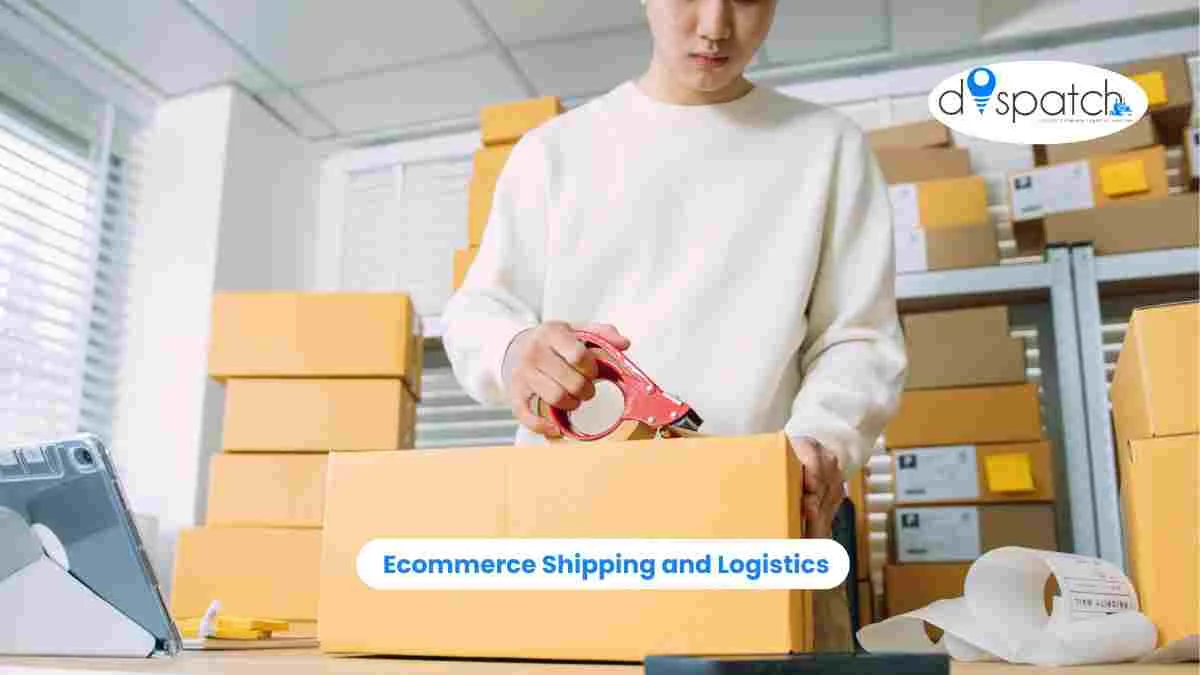
Introduction
Ecommerce has transformed the way businesses sell products and customers make purchases. With just a few clicks, shoppers can discover products, compare prices, place orders, make payments, and expect their purchases to arrive at their doorstep. While the online storefront is highly visible to customers, the processes behind the scenes are equally important.
This is where ecommerce shipping and logistics become essential.
Shipping and logistics determine how efficiently an ecommerce business moves products from suppliers and warehouses to customers. They influence delivery speed, shipping costs, inventory availability, order accuracy, tracking visibility, returns, and overall customer satisfaction.
In the early days of ecommerce, customers were generally willing to wait several days or even weeks for an online order. Today, expectations have changed significantly. Customers want convenient shipping options, accurate delivery estimates, real-time tracking, flexible delivery choices, and simple returns. Businesses that fail to meet these expectations can lose customers to competitors offering better fulfilment experiences.
For ecommerce companies, shipping is no longer simply the final step after a sale. It is an important part of the customer experience and a major factor in operational efficiency.
A well-designed logistics strategy can help an ecommerce business control costs, fulfil orders faster, improve customer loyalty, and scale operations. On the other hand, inefficient logistics can lead to delayed deliveries, damaged products, inventory problems, higher expenses, and negative reviews.
This comprehensive guide explains ecommerce shipping and logistics, their importance, major components, challenges, technology, best practices, and how businesses can create a more efficient delivery operation.
What Are Ecommerce Shipping and Logistics?
Ecommerce shipping and logistics refer to the processes involved in storing, managing, processing, transporting, delivering, and returning products purchased through an online store.
Although the terms shipping and logistics are sometimes used interchangeably, they cover different parts of the supply chain.
Shipping generally focuses on transporting an order from one location to another, particularly from a fulfilment centre or warehouse to the customer.
Logistics is broader. It includes inventory management, warehousing, order processing, packaging, transportation, route planning, delivery, tracking, and returns.
An ecommerce logistics process can include the following stages:
Product sourcing and procurement
Inventory storage
Stock management
Order placement
Order processing
Picking and packing
Shipping documentation
Carrier handover
Transportation
Last-mile delivery
Tracking and notifications
Delivery confirmation
Returns and reverse logistics
Each stage affects the customer experience and the overall cost of fulfilling an order.
Why Ecommerce Shipping and Logistics Matter
A customer may never see a warehouse or speak to a delivery partner, but they experience the results of logistics directly.
If an order arrives on time and in perfect condition, customers may consider the purchase successful. If the shipment is delayed, damaged, incorrectly delivered, or difficult to track, their perception of the ecommerce brand can suffer.
Efficient logistics can provide several advantages.
Faster Order Fulfilment
A streamlined logistics operation helps businesses process orders quickly. Faster picking, packing, dispatch, and transportation can reduce the time between purchase and delivery.
Better Customer Satisfaction
Customers appreciate accurate delivery estimates, reliable shipping, and clear communication. A dependable logistics system contributes significantly to customer satisfaction.
Lower Operational Costs
Efficient inventory management, packaging, route planning, and carrier selection can reduce unnecessary expenses.
Greater Scalability
An ecommerce business may be able to manage a small number of daily orders manually. As order volume increases, however, manual processes become difficult to maintain. A structured logistics system provides the foundation needed to handle growth.
Improved Brand Reputation
Delivery is part of the customer's overall interaction with a brand. Consistent and reliable fulfillment can strengthen trust and encourage repeat purchases.
Key Components of Ecommerce Shipping and Logistics
An effective ecommerce logistics operation consists of several interconnected components.
Inventory Management
Inventory management is one of the foundations of ecommerce logistics.
Businesses need to know how many products are available, where those products are located, and how quickly they are being sold.
Poor inventory management can create several problems. A website may show an item as available even though it is out of stock. Alternatively, a business may hold excessive inventory that increases storage costs.
Accurate inventory data helps businesses maintain appropriate stock levels and fulfil orders without unnecessary delays.
Businesses can use inventory management software to track stock across warehouses, stores, fulfilment centres, and other locations.
Warehousing
Warehouses are responsible for storing products before they are sold and shipped.
The location and organization of warehouses can have a major effect on shipping speed and cost.
An ecommerce business serving customers across a large geographic region may benefit from multiple fulfilment centres. Positioning inventory closer to customers can reduce transportation distances and improve delivery times.
Warehouse layout is also important. Frequently ordered products can be placed in easily accessible locations to speed up picking.
Order Processing
Order processing begins after the customer completes a purchase.
The system needs to confirm payment, verify inventory, identify the fulfillment location, generate the necessary documentation, and send the order to the warehouse for fulfillment.
Automation can significantly reduce processing time.
For example, an ecommerce platform can automatically send new orders to a warehouse management system. The warehouse team can then receive picking instructions without manually reviewing every order.
Picking and Packing
Picking involves locating the ordered products in the warehouse. Packing involves preparing those products for transportation.
Both processes need to be accurate and efficient.
Incorrect picking can result in customers receiving the wrong products. Poor packaging can increase the risk of damage during transportation.
Businesses should select packaging based on product size, weight, fragility, and transportation requirements.
Standardized packing procedures can help reduce errors and improve consistency.
Shipping
Once an order is packed, it is handed over to a shipping or logistics provider.
Businesses may work with one carrier or multiple providers depending on their requirements.
Factors to consider when selecting shipping partners include:
Geographic coverage
Delivery speed
Service reliability
Tracking capabilities
Pricing
Pickup availability
Weight and size restrictions
Return handling
Customer support
Delivery success rates
The cheapest carrier is not always the most economical choice. A slightly higher shipping cost may be justified if it produces fewer failed deliveries, damages, delays, and customer complaints.
Last-Mile Delivery
The last mile refers to the final stage of transportation between a local distribution point and the customer's delivery address.
It is often one of the most challenging and expensive parts of ecommerce logistics.
Traffic, incorrect addresses, customer availability, weather, building access, and delivery density can all influence last-mile performance.
Businesses can improve last-mile efficiency through route optimization, accurate addresses, delivery notifications, and local fulfilment facilities.
Shipment Tracking
Customers increasingly expect to know where their orders are.
Tracking provides visibility throughout the shipping process.
A good tracking experience may show important milestones such as:
Order confirmed
Order packed
Shipment dispatched
Shipment in transit
Shipment arrived at local facility
Out for delivery
Delivered
Tracking can also reduce pressure on customer support teams because customers can check shipment status themselves.
Reverse Logistics
Shipping does not end when a product is delivered.
Returns are an important part of ecommerce operations. Businesses need processes for receiving returned products, inspecting them, issuing refunds or replacements, and deciding whether products can be resold.
An efficient reverse logistics system can improve customer confidence and reduce the cost of returns.
Types of Ecommerce Shipping Options
Customers have different delivery needs, so ecommerce businesses often provide multiple shipping choices.
Standard Shipping
Standard shipping is generally the most economical option and is suitable for customers who are not in a hurry.
Express Shipping
Express shipping provides faster delivery than standard services. Customers may pay an additional fee for the increased speed.
Same-Day Delivery
Same-day delivery allows eligible orders to reach customers on the day they are placed.
It can be particularly useful for urgent purchases and businesses operating in densely populated urban markets.
Next-Day Delivery
Next-day delivery provides a balance between speed and cost. It can be a useful option for customers who want faster fulfillment without requiring delivery on the same day.
Scheduled Delivery
Some ecommerce businesses allow customers to choose a preferred delivery date or time window.
This can be useful for customers who may not be available throughout the day.
How to Choose the Right Shipping Strategy
There is no universal shipping strategy for every ecommerce business.
The right approach depends on product characteristics, customers, geographic coverage, order volume, and business objectives.
Understand Customer Expectations
Start by analyzing what customers actually want.
Some customers may prioritize low-cost shipping, while others may be willing to pay more for faster delivery.
Offering multiple shipping options can help businesses satisfy different customer segments.
Analyze Product Characteristics
Product weight, size, fragility, and value influence shipping decisions.
Small lightweight products can generally be transported differently from large or fragile items.
Businesses should also consider whether products require special handling.
Study Delivery Locations
Shipping costs can vary significantly by destination.
Businesses should analyze where customers are located and determine whether certain regions require specialized logistics arrangements.
Compare Carrier Performance
Businesses should evaluate shipping providers based on overall performance rather than price alone.
Important metrics include delivery success, transit time, damage rate, tracking quality, and customer complaints.
The Role of Technology in Ecommerce Logistics
Technology has become an essential part of modern ecommerce logistics.
Order Management Systems
An order management system helps businesses coordinate orders across sales channels and fulfilment locations.
It can automate order routing, inventory checks, shipping updates, and other processes.
Warehouse Management Systems
Warehouse management software can improve inventory visibility, picking, packing, and stock control.
Automation helps warehouse teams process larger order volumes without a proportional increase in manual work.
Transportation Management Systems
Transportation management systems can help businesses plan shipments, select carriers, optimize routes, and monitor transportation performance.
Real-Time Tracking
Tracking technology provides visibility to both businesses and customers.
Businesses can monitor shipments while customers can receive updates about expected delivery times.
Data Analytics
Logistics data can reveal important trends.
Businesses can analyze delivery times, shipping costs, return rates, failed deliveries, order volumes, and customer preferences to improve operations.
Benefits of Effective Ecommerce Shipping and Logistics
Improved Customer Retention
Reliable shipping can encourage customers to purchase from the same business again.
When customers know they can depend on a retailer to deliver orders accurately and on time, they have a stronger reason to return.
Increased Operational Efficiency
Well-designed logistics processes reduce unnecessary manual work and improve coordination between teams.
Better Inventory Utilization
Accurate inventory data helps businesses avoid both shortages and excess stock.
Reduced Shipping Errors
Standardized processes and technology can reduce incorrect addresses, wrong products, duplicate shipments, and other fulfilment problems.
Stronger Competitive Position
Businesses can differentiate themselves through fast, flexible, and reliable delivery options.
Greater Business Scalability
A structured logistics operation allows ecommerce companies to handle increased order volumes more effectively.
Common Ecommerce Shipping and Logistics Challenges
Despite technological improvements, ecommerce logistics can be complex.
Rising Shipping Costs
Transportation, fuel, labour, packaging, warehousing, and other expenses can put pressure on ecommerce margins.
Businesses need to continuously evaluate their shipping strategy to maintain profitability.
Delivery Delays
Delays can occur because of traffic, weather, operational disruptions, incorrect addresses, carrier capacity, or other unexpected events.
Clear communication is essential when delays occur.
Failed Deliveries
A failed delivery increases operational costs and can negatively affect customer satisfaction.
Businesses can reduce failed deliveries through accurate address collection, delivery notifications, customer confirmation, and flexible delivery options.
Inventory Inaccuracies
If inventory systems are not updated correctly, orders may be accepted for products that are unavailable.
Inventory synchronization is particularly important for businesses selling through multiple channels.
Returns
High return volumes can increase transportation and processing costs.
Clear product descriptions, accurate sizing information, quality control, and efficient return processes can help manage the impact.
How to Reduce Ecommerce Shipping Costs
Shipping costs are a major concern for many ecommerce businesses.
Fortunately, companies can improve cost efficiency without necessarily reducing service quality.
Optimize Packaging
Using appropriately sized packaging can reduce material usage and transportation costs.
Oversized packaging may take up unnecessary space during transportation.
Negotiate Carrier Rates
Businesses with consistent shipping volumes may be able to negotiate better commercial terms with logistics providers.
Use Multiple Carriers
A multi-carrier strategy can allow businesses to select the most suitable provider based on destination, shipment type, delivery speed, and price.
Consolidate Shipments
Where appropriate, consolidating shipments can improve transportation efficiency.
Improve First-Attempt Delivery Rates
Repeated delivery attempts can increase costs. Accurate addresses and customer communication can help improve first-attempt success.
Use Regional Fulfilment
Placing inventory closer to customers can reduce transportation distances and improve delivery times.
The Importance of Packaging in Ecommerce Logistics
Packaging protects products throughout the transportation journey.
A product that arrives damaged can result in customer dissatisfaction, replacement costs, returns, and negative reviews.
Packaging should therefore be treated as part of the logistics strategy rather than an afterthought.
Businesses should consider:
Product fragility
Package dimensions
Weight
Cushioning requirements
Weather protection
Tamper resistance
Labelling
Branding
Sustainability
The goal is to protect the product while avoiding unnecessary packaging costs.
Customer Communication and Delivery Experience
Shipping is not only a physical process. It is also a communication process.
Customers want to know what is happening with their orders.
Businesses should provide timely notifications at important stages of the shipment journey.
A strong communication strategy can include:
Order confirmation
Shipping confirmation
Tracking information
Estimated delivery date
Out-for-delivery notification
Delivery confirmation
Return instructions
Proactive communication can reduce uncertainty and improve customer confidence.
Ecommerce Shipping and Logistics for Small Businesses
Small ecommerce businesses may not have the same resources as large marketplaces, but they can still create efficient logistics operations.
A small business can begin with a simple strategy focused on a limited geographic area and a manageable number of shipping options.
As order volume grows, the company can introduce more advanced inventory management, warehouse technology, multiple carriers, and automated fulfilment processes.
Outsourcing logistics to a third-party logistics provider can also be an option.
A 3PL can manage warehousing, fulfillment, shipping, and returns on behalf of an ecommerce business.
This allows the retailer to focus more on product development, marketing, sales, and customer relationships.
Ecommerce Shipping and Logistics for Large Businesses
Large ecommerce businesses often require more sophisticated logistics networks.
They may operate multiple warehouses, fulfilment centres, regional hubs, and delivery partnerships.
Automation becomes increasingly valuable as order volumes increase.
Large businesses can use data to determine where inventory should be positioned, which carriers should handle particular routes, and how delivery operations can be optimized.
Scalability is a major consideration. A logistics system that works for 1,000 orders per day may need significant changes when order volumes reach 10,000 or 100,000 orders.
The Role of Third-Party Logistics Providers
Third-party logistics providers can manage various parts of an ecommerce supply chain.
Depending on the provider and service agreement, a 3PL may offer:
Warehousing
Inventory management
Order fulfilment
Packaging
Shipping
Tracking
Returns processing
Transportation management
Outsourcing logistics can reduce the need for an ecommerce business to invest heavily in its own warehouses and transportation infrastructure.
However, businesses should carefully evaluate 3PL providers based on service quality, technology, coverage, pricing, scalability, and customer support.
Measuring Ecommerce Logistics Performance
Businesses cannot improve what they do not measure.
Important ecommerce logistics KPIs include:
Order Fulfilment Time
Measures how long it takes to process an order after it is received.
On-Time Delivery Rate
Shows how frequently shipments arrive within the promised delivery window.
Order Accuracy
Measures how often customers receive the correct products and quantities.
Shipping Cost Per Order
Helps businesses understand the average logistics cost associated with each shipment.
Return Rate
Shows the percentage of orders returned by customers.
Failed Delivery Rate
Measures how frequently delivery attempts are unsuccessful.
Customer Satisfaction
Feedback, ratings, reviews, and support interactions can help businesses evaluate the customer experience.
Best Practices for Ecommerce Shipping and Logistics
Businesses can improve their logistics operations by following several best practices.
Offer Multiple Shipping Options
Give customers a choice between standard, express, same-day, or other delivery services where practical.
Set Accurate Delivery Expectations
Avoid promising delivery speeds that the logistics network cannot consistently achieve.
Use Accurate Inventory Data
Maintain real-time visibility into stock levels across fulfilment locations.
Automate Repetitive Tasks
Automation can reduce errors and improve processing speed.
Monitor Carrier Performance
Review delivery performance regularly and address recurring issues.
Make Tracking Easy
Customers should be able to access shipment information without unnecessary effort.
Improve Returns
Create a simple, transparent return process that protects customer confidence.
Continuously Analyze Data
Use logistics data to identify bottlenecks, unnecessary costs, and opportunities for improvement.
The Future of Ecommerce Shipping and Logistics
Ecommerce logistics will continue evolving as customer expectations, technology, and business models change.
Artificial intelligence, automation, predictive analytics, warehouse robotics, real-time tracking, and advanced route planning are likely to play increasingly important roles.
Businesses may also continue moving toward more localized fulfilment models. Instead of storing all products in a small number of large warehouses, companies can position high-demand products closer to customers.
The growth of omnichannel commerce is another important development. Customers may purchase products online and receive them from warehouses, retail stores, local fulfilment centres, or other locations.
The future of ecommerce logistics will therefore be increasingly data-driven and interconnected.
However, technology alone will not guarantee success. Businesses will still need reliable processes, experienced logistics partners, accurate information, and a customer-first approach.
Sustainability in Ecommerce Logistics
Sustainability has become an increasingly important consideration for ecommerce businesses.
The growth of online shopping can increase packaging consumption, transportation activity, and delivery-related emissions.
Businesses can explore ways to reduce environmental impact through:
Sustainable packaging materials
Right-sized packaging
Route optimization
Shipment consolidation
Local fulfilment
Electric delivery vehicles where feasible
Reduced packaging waste
Better inventory forecasting
Higher first-attempt delivery rates
Sustainable logistics can also benefit businesses financially when it reduces material waste and transportation inefficiencies.
How Ecommerce Shipping Can Build Customer Loyalty
A successful ecommerce relationship does not end when the customer clicks the "buy" button.
The delivery experience plays a significant role in determining whether the customer will shop again.
Reliable shipping can create confidence. Accurate tracking can reduce anxiety. Flexible delivery options can improve convenience. Easy returns can reduce purchase risk.
Together, these elements can create a stronger customer relationship.
For ecommerce brands competing in crowded markets, logistics can therefore become an important part of customer retention strategy.
Conclusion
Ecommerce shipping and logistics are fundamental to the success of modern online businesses. From inventory management and warehousing to order processing, packaging, transportation, last-mile delivery, tracking, and returns, every stage contributes to the customer's overall experience.
As ecommerce competition increases, customers are looking for more than attractive products and competitive prices. They want reliable delivery, transparent tracking, convenient shipping options, and simple returns.
Businesses that build efficient logistics systems can benefit from faster fulfillment, improved customer satisfaction, lower operational costs, stronger retention, and better scalability.
The most effective approach is to treat logistics as a strategic business function rather than simply an operational requirement. By combining accurate inventory management, suitable fulfillment locations, reliable delivery partners, technology, data analysis, and effective customer communication, ecommerce companies can create a shipping operation that supports both immediate customer needs and long-term growth.
Ultimately, successful ecommerce shipping is about delivering the right product to the right customer at the right time, in the right condition, and at a sustainable cost. Businesses that consistently achieve this can turn logistics into a genuine competitive advantage.
FAQs
Que: What is ecommerce shipping and logistics?
Ans: Ecommerce shipping and logistics include the processes used to store, manage, fulfil, transport, deliver, track, and return products purchased online. It covers activities such as inventory management, warehousing, packaging, carrier management, last-mile delivery, and reverse logistics.
Que: Why are ecommerce shipping and logistics important?
Ans: Effective ecommerce shipping and logistics help businesses deliver orders accurately and on time while controlling operational costs. They also influence customer satisfaction, brand reputation, repeat purchases, and the ability of an ecommerce business to scale.
Que: How can ecommerce businesses reduce shipping costs?
Ans: Businesses can reduce shipping costs by optimizing packaging, negotiating carrier rates, using multiple logistics providers, consolidating shipments, improving delivery success rates, and positioning inventory closer to customers.
Que: What is the role of technology in ecommerce logistics?
Ans: Technology helps ecommerce businesses automate order processing, manage inventory, optimize warehouse operations, select delivery routes, track shipments, analyze logistics performance, and provide customers with real-time delivery information.
Que: How can businesses improve their ecommerce delivery experience?
Ans: Businesses can improve delivery experiences by providing accurate delivery estimates, offering multiple shipping options, using reliable logistics partners, enabling shipment tracking, communicating proactively with customers, improving packaging, and maintaining a simple returns process.