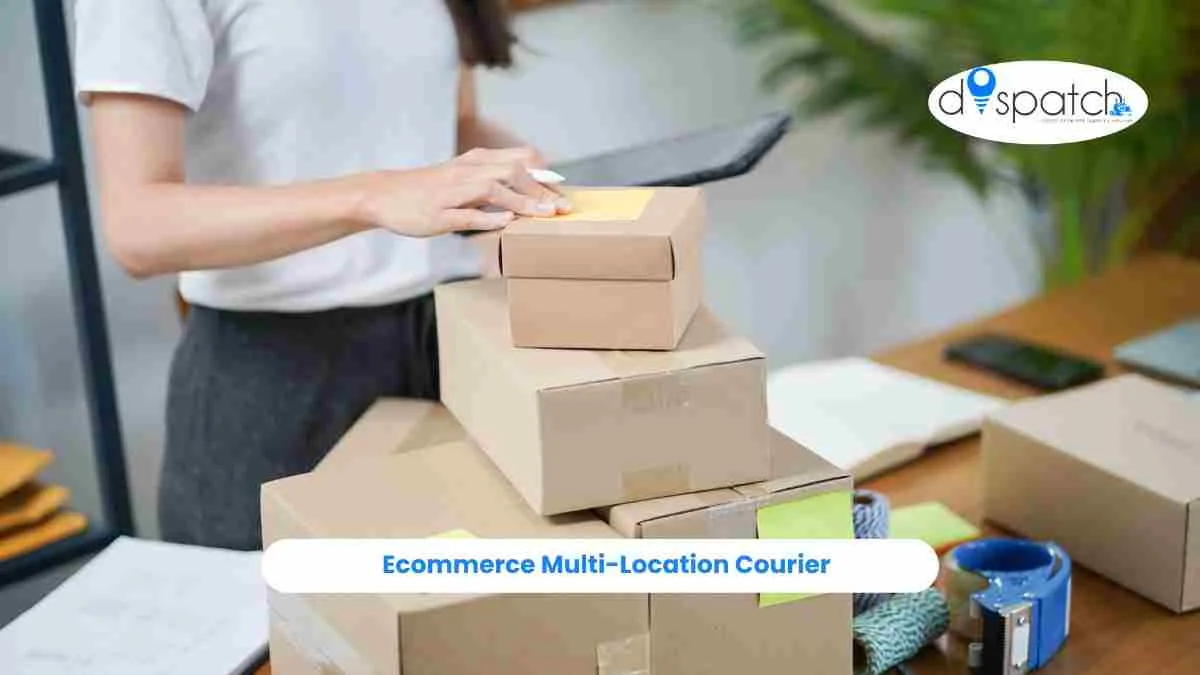
Introduction
The e-commerce industry has evolved rapidly, allowing businesses to sell products to customers across cities, states, and regions. As an online business grows, however, managing deliveries from a single warehouse or fulfilment centre can become increasingly difficult. Customers may be located far from the primary inventory location, delivery times may increase, and transportation costs can become more challenging to control.
One solution is to build a multi-location fulfilment and delivery strategy supported by an ecommerce multi-location courier.
An ecommerce multi-location courier helps businesses manage shipments originating from multiple warehouses, stores, fulfilment centres, distribution hubs, or seller locations. Instead of depending entirely on one shipping point, an online business can use several locations to bring inventory closer to customers and improve delivery efficiency.
This approach can be particularly useful for growing e-commerce companies that serve customers across large geographic areas. By distributing inventory strategically, businesses can potentially reduce delivery distances, improve delivery times, and provide customers with more convenient shipping options.
However, managing multiple shipping locations introduces its own challenges. Businesses must coordinate inventory, orders, courier pickups, tracking, returns, delivery routes, and customer communication across different locations.
A suitable courier partner and well-organized technology infrastructure can help businesses manage this complexity.
This comprehensive guide explains what an ecommerce multi-location courier is, how multi-location shipping works, its benefits, common challenges, technology requirements, cost considerations, and best practices for businesses looking to expand their delivery network.
What Is an Ecommerce Multi-Location Courier?
An ecommerce multi-location courier is a logistics service that supports online businesses shipping customer orders from multiple physical locations.
These locations may include:
Warehouses
Fulfilment centres
Retail stores
Distribution hubs
Seller facilities
Regional inventory centres
Third-party logistics facilities
In a traditional single-location model, all orders may be dispatched from one central warehouse. While this can be simple to manage initially, it may become inefficient when customers are spread across a large geographic area.
A multi-location model allows businesses to position inventory closer to demand.
For example, an online business may maintain inventory in several cities. When a customer places an order, the business can determine which location is best positioned to fulfil that order based on inventory availability, destination, shipping cost, delivery speed, and other operational considerations.
The courier then collects the package from the selected location and transports it through its delivery network.
This creates a more flexible logistics structure that can support business expansion.
Why Multi-Location Shipping Matters in E-commerce
E-commerce customers increasingly expect convenient and reliable delivery.
When a business operates from a single location, orders going to distant destinations may require longer transportation journeys.
A multi-location approach can help address this challenge by positioning inventory closer to customers.
Faster Delivery
When products are stored closer to the customer, the distance they need to travel may be reduced.
This can support faster delivery options where the courier network and service availability allow.
Broader Geographic Coverage
Multiple fulfillment locations can make it easier for a business to serve customers across different regions.
Improved Inventory Utilization
Businesses can distribute inventory across locations according to demand patterns.
Potentially Lower Transportation Costs
Shorter delivery distances can sometimes reduce transportation costs, although the overall impact depends on inventory distribution, courier pricing, storage costs, and order volumes.
Better Customer Experience
Faster and more predictable deliveries can contribute to higher customer satisfaction.
How Ecommerce Multi-Location Courier Services Work
A multi-location delivery system typically involves several interconnected stages.
Customer Places an Order
The customer purchases a product through an e-commerce website, marketplace, or mobile application.
The order system records information such as the customer's address, products, quantity, payment method, and preferred delivery service.
Inventory Availability Is Checked
The system determines where the ordered product is available.
If the product exists at multiple locations, the business can select an appropriate fulfilment point based on its operational rules.
Fulfilment Location Is Selected
The business may consider several factors when selecting the dispatch location.
These can include:
Customer distance
Product availability
Delivery commitments
Shipping cost
Warehouse capacity
Courier pickup availability
Inventory levels
The objective is to select the location that provides the best balance between service quality and operational efficiency.
Order Is Picked and Packed
Staff at the selected location retrieve the product and prepare it for shipment.
Proper packaging helps protect the product during transportation.
Courier Pickup Is Arranged
The ecommerce multi-location courier collects the package from the selected warehouse, store, fulfilment centre, or other approved location.
For businesses operating several facilities, scheduled pickups can help maintain consistency.
Shipment Enters the Courier Network
The package is transported through the courier's sorting and distribution network.
Tracking Information Is Generated
A unique tracking or shipment reference allows the business and customer to monitor the order.
Last-Mile Delivery
The parcel is transported from a local delivery facility to the customer's address.
Delivery Confirmation
Once the order is delivered, the delivery status is updated according to the courier's process.
Benefits of Using an Ecommerce Multi-Location Courier
A multi-location courier strategy can provide several advantages.
Faster Customer Deliveries
One of the biggest benefits is the potential to reduce delivery distances.
If products are stored near major customer markets, orders may spend less time in long-distance transportation.
Expanded Market Reach
Businesses can use multiple inventory locations to support customers in different geographic regions.
This can make expansion easier without requiring every order to travel from a central warehouse.
Improved Customer Satisfaction
Customers generally appreciate accurate delivery estimates and reliable shipment tracking.
When products can be dispatched from locations closer to customers, businesses may be able to offer more competitive delivery timelines.
Better Inventory Distribution
Multi-location fulfillment can allow businesses to distribute inventory according to regional demand.
High-demand products can be stocked closer to markets where they sell frequently.
Greater Operational Flexibility
If one fulfillment location experiences a temporary operational issue, other locations may be able to fulfill some orders, depending on inventory availability and business processes.
Support for Business Expansion
A distributed delivery network can provide a foundation for entering new markets.
Instead of relying exclusively on a central warehouse, businesses can develop regional fulfilment capabilities as demand grows.
Multi-Location Courier vs. Single-Location Shipping
The difference between these models is primarily the number and distribution of fulfilment points.
Single-Location Shipping
In a single-location model:
Inventory is concentrated in one main facility.
Most orders originate from the same location.
Inventory management can be simpler.
Long-distance deliveries may be more common.
Expansion can eventually create transportation challenges.
Multi-Location Shipping
In a multi-location model:
Inventory is distributed across several facilities.
Orders can be dispatched from different locations.
Delivery distances may be reduced.
Inventory management is more complex.
Technology becomes increasingly important.
Regional demand can be addressed more effectively.
Neither model is automatically better for every business.
A company should select a fulfilment strategy based on its order volumes, customer locations, product characteristics, inventory costs, and growth plans.
The Role of Inventory Management
Inventory management is critical to multi-location shipping.
When inventory is stored in multiple places, businesses need to know exactly what products are available at each location.
For example, if an online store shows a product as available but the nearest fulfilment centre has no stock, the order may need to be dispatched from a more distant location.
This can increase delivery time and cost.
Businesses should therefore maintain accurate inventory records across all locations.
Inventory systems can help answer questions such as:
How many units are available at each location?
Which products are selling fastest in each region?
Which warehouse is closest to the customer?
Where should additional inventory be stored?
When should stock be replenished?
Which location should fulfil a particular order?
Accurate inventory data is essential for making multi-location fulfilment work efficiently.
Ecommerce Multi-Location Courier and Order Routing
Order routing determines where an order should be fulfilled.
This is one of the most important decisions in a multi-location shipping strategy.
Businesses can create routing rules based on different factors.
Distance
The closest fulfillment location may be selected when sufficient inventory is available.
Inventory Availability
If a product is unavailable at one location, the system can identify another location that has stock.
Shipping Cost
Businesses may compare transportation costs before selecting a fulfilment location.
Delivery Speed
If an order has a fast-delivery requirement, the system may prioritize a location that can meet the requested timeline.
Warehouse Capacity
During busy periods, businesses may route orders to facilities with available processing capacity.
Product Availability
Some products may only be stored at certain locations.
A combination of these factors can help businesses create an effective order-routing strategy.
The Importance of Courier Pickup Management
Managing courier pickups becomes more complex when a business has multiple fulfilment locations.
Each facility may have its own operating hours, order volumes, and pickup requirements.
Businesses should establish clear pickup schedules with their courier partners.
Consistent pickups can help reduce delays between order fulfilment and shipment movement.
For high-volume businesses, pickup performance should be monitored across locations.
For example, a business may discover that one warehouse consistently has packages ready before the courier arrives while another location frequently misses its pickup window.
This information can help improve logistics coordination.
Shipment Tracking Across Multiple Locations
Tracking becomes particularly important when businesses operate multiple fulfilment points.
Customers should not need to know which warehouse is handling their order.
They simply want to know where their package is and when it is expected to arrive.
A centralized tracking system can provide visibility regardless of the shipment's origin.
Businesses can use tracking information to:
Monitor shipments
Identify delays
Respond to customer queries
Measure courier performance
Analyze regional delivery patterns
Investigate shipment exceptions
Centralized tracking is therefore an important component of an effective multi-location logistics operation.
Ecommerce Multi-Location Courier and Last-Mile Delivery
Last-mile delivery is the final stage of the shipping journey.
Multi-location fulfilment can improve last-mile efficiency when inventory is positioned close to customer demand.
For example, if customers in a particular region frequently order certain products, storing those products at a nearby fulfillment facility may reduce the distance required for final delivery.
However, last-mile efficiency depends on more than warehouse location.
Other factors include:
Address accuracy
Traffic
Delivery density
Customer availability
Route planning
Shipment volume
Local operating conditions
Businesses should therefore consider the entire delivery network rather than focusing only on warehouse proximity.
Managing Returns in a Multi-Location Model
Returns can be more complicated when inventory is distributed across multiple locations.
A returned product may need to be sent to:
The original fulfilment centre
A designated returns facility
The nearest warehouse
A repair centre
A seller location
Businesses should establish clear rules for handling returned products.
They also need to decide where returned inventory should be stored after inspection.
An effective reverse-logistics strategy can prevent returned products from becoming a major operational bottleneck.
Ecommerce Multi-Location Courier for Small Businesses
Multi-location fulfillment is not limited to large e-commerce companies.
Small businesses may also benefit from distributed inventory as they expand.
A seller might begin with one warehouse and later add inventory at a second location when demand increases in another region.
Instead of creating an extensive internal transportation network, the business can work with a courier partner that provides pickup and delivery services from multiple locations.
This allows the seller to scale its shipping infrastructure gradually.
However, small businesses should consider the additional complexity of managing multiple inventory locations before adopting this model.
Ecommerce Multi-Location Courier for Large Enterprises
Large e-commerce businesses often operate multiple warehouses or fulfillment centres.
For these companies, multi-location courier management can become a major logistics function.
They may require:
Centralized shipment visibility
Automated order routing
Multi-location pickup scheduling
Inventory synchronization
Courier integration
Regional performance reporting
Returns management
Bulk shipment processing
Delivery analytics
Technology integration is particularly important at this scale.
Manual coordination between multiple warehouses and courier networks can quickly become inefficient.
Technology Requirements for Multi-Location Shipping
Technology is one of the foundations of successful multi-location logistics.
Order Management Systems
An order management system can centralize orders received from different sales channels.
Inventory Management Systems
Inventory systems can show product availability across locations.
Warehouse Management Systems
Warehouse systems can coordinate picking, packing, and dispatch operations.
Courier Integration
Connecting courier services with business systems can simplify shipment booking and tracking.
Analytics
Businesses can use logistics data to evaluate performance across regions.
Technology allows these systems to communicate and create a more connected fulfilment process.
Benefits of Centralized Shipping Visibility
One of the challenges of multi-location operations is maintaining a complete view of shipments.
A centralized dashboard can help businesses monitor orders regardless of their origin.
Management teams can potentially see:
Orders awaiting fulfilment
Orders ready for pickup
Shipments in transit
Delayed shipments
Out-for-delivery orders
Completed deliveries
Returned shipments
This visibility can make it easier to identify operational issues.
For example, if deliveries from one location are consistently delayed, management can investigate whether the issue is related to inventory preparation, courier pickup, transportation, or local delivery conditions.
Factors to Consider Before Choosing an Ecommerce Multi-Location Courier
Businesses should evaluate several factors before selecting a logistics partner.
Geographic Coverage
The courier should cover the locations from which the business ships and the destinations where customers are located.
Pickup Reliability
Consistent pickups are important for maintaining fulfilment schedules.
Tracking
Businesses should have access to reliable shipment tracking across all dispatch locations.
Technology Integration
Integration with order and inventory systems can reduce manual processes.
Delivery Performance
Businesses should evaluate delivery timelines and successful delivery rates.
Returns Support
The courier should be able to support the company's reverse-logistics requirements.
Scalability
The courier should be capable of handling increased shipment volumes as the business grows.
Customer Support
Responsive support can help resolve shipment exceptions and operational issues.
How to Optimize Multi-Location Shipping Costs
Managing multiple locations can increase operational complexity and costs.
Businesses should therefore optimize their network carefully.
Place Inventory Based on Demand
Products should be stocked where customer demand is strongest.
Analyze Shipping Distances
Businesses should monitor where shipments originate and where they are delivered.
Reduce Unnecessary Transfers
Moving inventory between warehouses unnecessarily can increase costs.
Improve Packaging
Efficient packaging can reduce material usage and transportation volume.
Monitor Courier Pricing
Businesses should understand how courier charges vary by origin, destination, weight, dimensions, and service type.
Review Warehouse Performance
Some locations may process orders more efficiently than others.
Performance data can help identify areas for improvement.
The Importance of Regional Inventory Planning
Regional inventory planning is a major part of multi-location fulfillment.
Businesses should analyze historical sales and customer demand to determine where inventory should be placed.
For example, if a product sells heavily in one region but rarely in another, it may make sense to maintain greater stock levels closer to the high-demand market.
However, businesses should avoid over-distributing inventory.
Holding too much stock across multiple locations can increase storage costs and make inventory management more complicated.
The objective is to find the right balance between inventory availability and operational cost.
Common Challenges of Ecommerce Multi-Location Courier Operations
Multi-location shipping offers several advantages, but it also introduces challenges.
Inventory Fragmentation
Stock distributed across multiple locations can make inventory management more difficult.
Higher Operational Complexity
More fulfilment points mean more processes to coordinate.
Technology Integration
Systems need to share accurate information across locations.
Courier Coordination
Pickup schedules and service performance may vary between locations.
Returns Management
Returned products need clear routing rules.
Stock Imbalances
One warehouse may run out of a product while another has excess inventory.
Increased Management Requirements
Businesses need clear processes and performance monitoring to maintain consistency.
Understanding these challenges before expanding can help businesses design a more effective strategy.
How to Improve Ecommerce Multi-Location Courier Operations
Businesses can improve multi-location shipping by following several practical strategies.
Maintain Accurate Inventory Data
Every fulfillment location should have up-to-date stock information.
Automate Order Routing
Technology can help determine the best fulfillment location based on predefined rules.
Standardize Packaging
Using consistent packaging standards can improve efficiency.
Establish Reliable Pickup Schedules
Courier pickups should align with warehouse operating hours and order-processing schedules.
Centralize Tracking
Businesses should have one system for monitoring shipments across locations.
Monitor Regional Performance
Compare delivery and fulfilment metrics between locations.
Develop a Clear Returns Strategy
Returned products should have predefined destinations and processes.
Plan for Peak Seasons
Additional inventory and courier capacity may be needed during high-demand periods.
Key Metrics for Multi-Location Ecommerce Shipping
Businesses should measure shipping performance across every location.
Useful metrics include:
Order Processing Time
Measures how quickly an order moves from confirmation to dispatch.
Pickup Success Rate
Shows how consistently couriers collect shipments as scheduled.
On-Time Delivery Rate
Measures how frequently orders reach customers within the expected timeframe.
Shipping Cost Per Order
Helps businesses compare logistics expenses across locations.
Return-to-Origin Rate
A high rate may indicate delivery or address-related problems.
Damage Rate
Shows how often shipments are reported as damaged.
Inventory Accuracy
Measures how closely recorded inventory matches actual stock.
Fulfilment Accuracy
Tracks whether customers receive the correct products.
Comparing these metrics across locations can reveal opportunities for improvement.
Ecommerce Multi-Location Courier and Customer Experience
The purpose of multi-location shipping should ultimately be to create a better customer experience.
Customers do not necessarily care which warehouse fulfils their order. They care about receiving the correct product at the right address within the promised timeframe.
A well-designed multi-location strategy can support this by:
Reducing unnecessary delivery distances
Improving delivery speed
Providing reliable tracking
Increasing product availability
Offering flexible delivery options
Supporting efficient returns
When these elements work together, logistics can become a competitive advantage rather than simply an operational necessity.
Preparing for Peak E-commerce Demand
Peak sales periods can create significant pressure on logistics networks.
Businesses operating multiple fulfilment locations have the opportunity to distribute this demand.
For example, inventory can be positioned closer to high-demand regions before a major sales event.
However, businesses need to coordinate:
Inventory levels
Warehouse staffing
Packaging supplies
Courier pickup capacity
Transportation availability
Customer communication
Advance planning can help reduce delays and fulfilment bottlenecks.
Sustainability and Multi-Location Shipping
Multi-location fulfillment can also contribute to more efficient transportation when inventory is strategically positioned.
Shorter shipping distances can potentially reduce unnecessary transportation.
Businesses can further improve efficiency through:
Better inventory forecasting
Route optimization
Appropriate packaging
Reduced failed deliveries
Shipment consolidation where practical
Efficient warehouse placement
Sustainability should be considered alongside cost, delivery speed, inventory requirements, and customer expectations.
The Future of Ecommerce Multi-Location Courier Services
The future of e-commerce logistics will likely involve greater use of automation, artificial intelligence, predictive analytics, and connected systems.
Businesses will increasingly use data to determine where inventory should be stored and which location should fulfil an order.
Courier networks may also use advanced technology to optimize transportation and last-mile delivery.
Automation can help businesses coordinate orders across multiple fulfilment centres without requiring extensive manual intervention.
As e-commerce continues to expand geographically, multi-location shipping is likely to become increasingly relevant for businesses seeking faster delivery and broader market coverage.
The key will be creating a connected ecosystem where inventory, order management, warehouses, couriers, tracking systems, and customers can share accurate information.
Best Practices for Ecommerce Multi-Location Courier Management
Businesses can improve their multi-location logistics strategy by following these best practices:
Use accurate inventory data across every location.
Create clear order-routing rules.
Select courier partners with suitable geographic coverage.
Standardize packing and dispatch procedures.
Use centralized shipment tracking.
Monitor delivery performance by region.
Maintain clear return-routing processes.
Prepare courier capacity for seasonal demand.
Review shipping costs regularly.
Use technology to automate repetitive logistics tasks.
These practices can help businesses build a more efficient and scalable shipping network.
Conclusion
An ecommerce multi-location courier strategy can help online businesses manage the growing complexity of geographically distributed order fulfilment.
By shipping products from multiple warehouses, stores, fulfillment centres, or regional facilities, businesses can position inventory closer to customers and potentially improve delivery speed, geographic coverage, and operational efficiency.
However, multi-location shipping also requires careful coordination. Inventory must remain accurate, orders need to be routed intelligently, courier pickups must be reliable, and shipment tracking needs to remain visible across every location.
Technology plays a central role in this process. Order management, inventory management, warehouse systems, courier integration, and analytics can work together to create a connected logistics operation.
Businesses should also measure performance regularly. Delivery times, shipping costs, fulfilment accuracy, pickup performance, returns, and inventory accuracy can provide valuable insights into how effectively each location is operating.
For small businesses, multi-location fulfilment can support gradual expansion into new markets. For large enterprises, it can provide the infrastructure needed to manage complex, high-volume delivery networks.
Ultimately, the goal of an ecommerce multi-location courier strategy is not simply to operate more warehouses or dispatch packages from more places. The goal is to create a smarter delivery network that puts products closer to customers, improves shipping efficiency, provides greater visibility, and supports long-term business growth.
As customer expectations continue to evolve, businesses that build flexible, technology-enabled, and scalable logistics operations will be better positioned to compete in the growing e-commerce market.
Frequently Asked Questions
Que: What is an ecommerce multi-location courier?
Ans: An ecommerce multi-location courier is a logistics service that supports businesses in shipping customer orders from multiple warehouses, fulfilment centres, stores, or other dispatch locations. It helps businesses manage pickups, transportation, tracking, and delivery across different regions.
Que: What are the benefits of using an ecommerce multi-location courier?
Ans: Benefits can include faster deliveries, wider geographic coverage, improved inventory distribution, greater operational flexibility, better customer experience, and potential transportation-cost efficiencies.
Que: How does multi-location shipping improve delivery times?
Ans: When inventory is positioned closer to customers, orders may have shorter transportation distances. This can help businesses provide faster delivery in locations where suitable courier services are available.
Que: What technology is required for multi-location ecommerce shipping?
Ans: Businesses can benefit from order management systems, inventory management software, warehouse management systems, courier integrations, centralized tracking, and analytics tools. These technologies help coordinate orders and shipments across different locations.
Que: How should an e-commerce business choose a multi-location courier?
Ans: Businesses should evaluate geographic coverage, pickup reliability, tracking, delivery performance, technology integration, returns support, customer service, scalability, and pricing. The right courier should match the company's shipment volumes, locations, products, and growth plans.