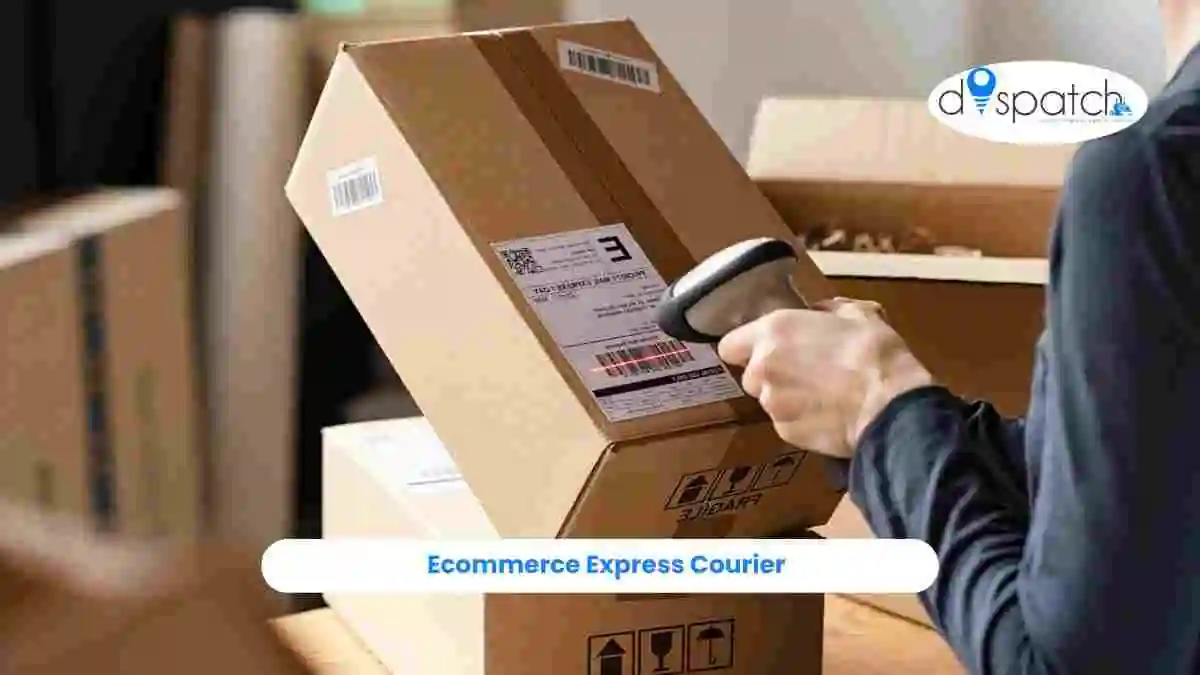
Introduction
The rapid growth of online shopping has transformed the way businesses sell products and customers make purchases. Today, consumers expect more than simply receiving their orders. They want fast deliveries, accurate tracking, convenient shipping options, secure handling, and consistent service. For e-commerce businesses, meeting these expectations has become an important part of building customer loyalty and maintaining a competitive advantage.
This is where an ecommerce express courier service can make a significant difference.
An ecommerce express courier provides specialized delivery solutions designed to move online orders quickly and efficiently from sellers, warehouses, fulfillment centres, or distribution hubs to customers. Unlike traditional shipping arrangements that may focus primarily on moving parcels from one location to another, express e-commerce logistics emphasizes speed, visibility, reliability, and a smooth delivery experience.
For small online sellers, growing direct-to-consumer brands, marketplaces, and established e-commerce companies, choosing the right courier partner can have a direct impact on operational efficiency and customer satisfaction. Faster deliveries can reduce waiting times, while dependable tracking can give customers confidence that their packages are moving as expected.
However, speed is only one part of an effective e-commerce courier solution. Businesses also need to consider pickup coverage, delivery reach, shipment tracking, parcel security, cash-on-delivery support where applicable, returns management, technology integration, pricing, and customer service.
This comprehensive guide explains what an ecommerce express courier is, how it works, why it matters to online businesses, what features to look for, and how companies can build a more efficient delivery strategy.
What Is an Ecommerce Express Courier?
An ecommerce express courier is a courier service designed to support the shipping and delivery requirements of online businesses. It enables merchants to send customer orders through a structured logistics network with an emphasis on timely delivery and shipment visibility.
When a customer places an order on an e-commerce website or marketplace, the seller needs to complete several steps before the product reaches the buyer. The order may need to be picked and packed, labelled, collected from the seller, sorted at a logistics facility, transported between locations, and finally delivered to the customer's address.
An express courier service coordinates these stages to reduce unnecessary delays.
The exact delivery process depends on the courier provider, shipping destination, service level, package characteristics, and selected delivery option. Some shipments may be suitable for same-day or next-day delivery, while others may require a longer transit period because of distance or geographic coverage.
For businesses, the main objective is to establish a dependable connection between order fulfilment and final-mile delivery.
Why Express Delivery Matters in E-commerce
Delivery has become a major part of the overall online shopping experience. A customer may discover a product through advertising, compare prices, read reviews, place an order, and complete payment within minutes. Once the purchase is confirmed, however, the customer's attention often shifts to one question:
When will my order arrive?
A long or uncertain delivery process can negatively affect the customer's perception of a brand. On the other hand, clear delivery commitments and reliable shipment updates can create confidence.
An ecommerce express courier can help businesses address these expectations by offering faster transportation and better shipment visibility.
Express delivery can be particularly valuable for products where customers are more likely to prioritize speed. These may include fashion items, electronics accessories, gifts, documents, personal-care products, replacement parts, business supplies, and other time-sensitive purchases.
Faster logistics can also support businesses during high-demand periods. Sales campaigns, festive seasons, product launches, and promotional events can generate large increases in order volumes. A reliable courier network can help businesses manage these peaks more effectively.
How Ecommerce Express Courier Services Work
Although processes differ between logistics providers, the basic workflow usually follows several stages.
Order Confirmation
The process begins when a customer places an order. The e-commerce business confirms the order and prepares the product for shipment.
Order information generally includes the customer's delivery address, contact details, product information, package dimensions, weight, and selected delivery service.
Packaging and Shipment Preparation
The seller prepares the product for transportation. Proper packaging is important because parcels can pass through multiple handling and sorting stages before reaching the recipient.
Businesses should select packaging that protects the product while avoiding unnecessary weight or excessive dimensions.
The shipping label is then generated and attached to the package.
Courier Pickup
The courier collects the package from the seller, warehouse, store, or fulfilment centre.
For businesses handling significant shipment volumes, scheduled pickups can make the process more efficient. Instead of arranging a separate shipment every time an order is ready, sellers may establish regular pickup schedules based on their operational requirements.
Sorting and Transportation
After pickup, the package moves through the courier network. It may be transported to a sorting facility where shipments are categorized according to destination and service type.
The parcel then moves toward the destination region through the appropriate transportation network.
Tracking and Shipment Updates
Tracking is an important component of modern e-commerce delivery.
Once a shipment is booked, the courier typically assigns a unique tracking or shipment reference number. Businesses and customers can use this information to monitor shipment progress.
Tracking updates can provide information about pickup, transit, processing, arrival at a facility, out-for-delivery status, and final delivery.
Last-Mile Delivery
The final stage is delivery to the customer's address.
Last-mile delivery can be one of the most challenging parts of e-commerce logistics because addresses may vary significantly, traffic conditions can change, and recipients may not always be available.
A well-managed courier network attempts to make this final stage as efficient and predictable as possible.
Delivery Confirmation
Once the parcel reaches the customer, the shipment is marked as delivered according to the courier's delivery process.
Delivery confirmation helps businesses maintain shipment records and gives them visibility into completed orders.
Key Benefits of Using an Ecommerce Express Courier
Selecting a suitable courier partner can provide several benefits to online businesses.
Faster Delivery
The most obvious advantage is speed. Express courier services are designed to prioritize timely movement of shipments.
For businesses competing in crowded online markets, faster delivery can become an important differentiator.
Customers may be more likely to purchase from a seller when the estimated delivery date is convenient and clearly communicated.
Better Customer Experience
A successful e-commerce transaction does not end when payment is completed. Delivery is part of the customer journey.
If a package arrives within the promised timeframe and the customer can easily track it, the overall shopping experience is likely to be more positive.
Reliable logistics therefore contributes to customer satisfaction beyond the product itself.
Improved Shipment Visibility
Tracking allows sellers to monitor orders after they leave their facilities.
This visibility can help businesses identify delayed shipments, respond to customer questions, and manage delivery-related issues more efficiently.
For customers, tracking reduces uncertainty because they can check the current status of their order rather than repeatedly contacting the seller.
Support for Business Growth
As order volumes increase, managing deliveries manually can become difficult.
An ecommerce express courier can provide the infrastructure needed to process a larger number of shipments. This allows merchants to focus more on sales, product development, customer acquisition, and other core business activities.
Wider Delivery Reach
A courier network can enable businesses to serve customers across a broader geographic area.
This is especially valuable for online sellers that want to expand beyond their local markets without creating their own delivery infrastructure.
Better Operational Efficiency
Courier partnerships can simplify several logistics activities, including shipment booking, pickup scheduling, tracking, delivery confirmation, and returns management.
When integrated properly with an e-commerce operation, these services can reduce repetitive manual tasks.
Important Features to Look for in an Ecommerce Express Courier
Not every courier service is equally suitable for every online business. Merchants should evaluate several factors before selecting a logistics partner.
Delivery Speed
Businesses should understand the courier's available service levels and delivery timelines.
A company selling everyday products may not need the fastest possible service for every order. However, it may benefit from having express options available for customers who are willing to pay for faster delivery.
Tracking Capability
A robust tracking system should provide useful shipment updates.
Businesses should ideally be able to access tracking information easily and share relevant updates with customers.
Tracking becomes particularly important when businesses handle large numbers of orders because manually checking individual shipments can consume considerable time.
Pickup Network
Convenient pickup is essential for online merchants.
Businesses should assess whether the courier can collect packages from their locations consistently and according to their operating schedule.
For high-volume sellers, dependable pickups can have a major impact on daily fulfilment operations.
Delivery Coverage
Geographic reach is another important consideration.
A courier may offer strong service in metropolitan areas but have different transit times in remote or less accessible regions. Businesses should therefore examine the locations they currently serve and their expected expansion markets.
Technology Integration
Modern e-commerce logistics increasingly depend on technology.
Courier systems may offer shipment booking tools, tracking interfaces, application programming interfaces, dashboards, notifications, and other digital features.
Technology integration can help merchants automate shipping activities and reduce manual data entry.
Returns Support
Returns are a normal part of e-commerce.
A courier partner should ideally support an efficient reverse-logistics process so that returned products can move back to the seller or designated processing centre.
An organized return process can improve customer experience and simplify inventory management.
Cash-on-Delivery Support
In markets where cash-on-delivery remains an important payment method, businesses should evaluate whether their courier partner can support COD shipments and the associated collection and settlement processes.
Customer Support
Even with good technology, delivery issues can occur. Packages can be delayed, addresses can require clarification, or customers may not be available at the time of delivery.
Responsive courier support can help businesses resolve such issues more efficiently.
Ecommerce Express Courier and Last-Mile Delivery
Last-mile delivery refers to the final stage of the shipment journey, typically from a local delivery facility to the customer's address.
This stage is particularly important because it directly affects the customer's perception of the delivery service.
A shipment may travel hundreds or thousands of kilometres successfully, but a failed final delivery can still result in customer dissatisfaction.
Several factors can affect last-mile delivery:
Incorrect or incomplete addresses
Traffic congestion
Recipient unavailability
Weather conditions
Remote delivery locations
High delivery volumes
Building access restrictions
Multiple delivery attempts
An effective ecommerce express courier works to manage these challenges through route planning, tracking systems, delivery notifications, operational processes, and trained delivery personnel.
The Role of Tracking in E-commerce Delivery
Shipment tracking is no longer simply an optional convenience. For many online businesses, it is an important part of customer communication.
When customers receive tracking information, they can understand where their orders are in the delivery process.
Tracking can also reduce pressure on customer support teams. Without shipment visibility, customers may contact the seller asking whether an order has been dispatched or when it is expected to arrive.
With accessible tracking, customers can often obtain this information independently.
For businesses, tracking data can also provide operational insights. Repeated delays in a particular route or stage of the network may indicate an opportunity to improve logistics planning.
How Businesses Can Improve Ecommerce Delivery Performance
Working with a courier partner is only one part of successful delivery management. Businesses can also improve performance through better internal processes.
Maintain Accurate Customer Information
Incorrect addresses are one of the common causes of delivery problems.
Businesses should collect complete and accurate customer information during checkout. Address validation, clear contact details, and careful order processing can reduce avoidable delivery issues.
Use Appropriate Packaging
Packaging should protect products without creating unnecessary bulk.
Excessively large packaging can increase transportation costs and make storage and handling less efficient.
Set Realistic Delivery Expectations
Businesses should avoid promising delivery times that their logistics network cannot consistently achieve.
Clear and realistic delivery estimates can create more trust than overly aggressive promises that frequently result in delays.
Automate Shipment Processing
For growing businesses, automation can improve efficiency.
Integrating the e-commerce platform with shipping and courier systems can reduce repetitive work such as entering customer information, creating shipment records, and updating order statuses.
Monitor Delivery Metrics
Businesses should regularly evaluate delivery performance.
Useful metrics can include:
Average delivery time
First-attempt delivery rate
Shipment delay rate
Return-to-origin rate
Delivery success rate
Shipping cost per order
Customer complaints related to delivery
Average number of delivery attempts
Monitoring these metrics can help merchants identify operational weaknesses and improve their logistics strategy.
Ecommerce Express Courier for Small Businesses
Small and emerging e-commerce businesses often have limited logistics infrastructure.
They may operate from a home office, small warehouse, retail store, or shared fulfilment facility. Building an internal delivery network can be expensive and difficult to manage.
An ecommerce express courier can give smaller businesses access to established logistics capabilities without requiring them to maintain their own transportation fleet.
This can make it easier for a small business to serve customers beyond its immediate location.
For new merchants, the ability to offer professional delivery and tracking can also strengthen the credibility of the business.
Ecommerce Express Courier for Large Businesses
Large e-commerce companies have different logistics requirements.
They may process thousands or more shipments and require automated systems, multiple pickup locations, extensive delivery coverage, detailed reporting, and structured account management.
For these businesses, courier performance needs to be measured at scale.
A logistics partner must be capable of handling fluctuations in shipment volume while maintaining service consistency.
Integration with warehouse management systems, order management systems, and e-commerce platforms can become particularly important as shipment volumes grow.
The Importance of Reverse Logistics
Delivery is only one direction of e-commerce logistics.
Products may also need to travel from customers back to sellers because of returns, exchanges, damaged goods, incorrect products, or warranty requirements.
This process is known as reverse logistics.
An efficient reverse-logistics system can help businesses process returned products more quickly, inspect inventory, and make eligible products available for resale.
A courier partner that supports organized return shipments can therefore contribute to the overall efficiency of an e-commerce operation.
How Express Courier Services Can Improve Customer Loyalty
Customers remember the entire buying experience, not just the product.
If an order is delivered quickly, securely, and within the promised timeframe, the delivery experience can reinforce the customer's trust in the seller.
Conversely, repeated delivery delays or poor communication can cause customers to reconsider future purchases.
This makes logistics an important component of customer retention.
Businesses should therefore view courier services not merely as a transportation expense but as part of the broader customer experience.
Choosing the Right Ecommerce Express Courier Partner
The right courier partner depends on the business's specific needs.
Before making a decision, merchants should consider:
What is the average daily shipment volume?
Which cities, regions, or countries need to be served?
How quickly do customers expect delivery?
Is shipment tracking available?
Are scheduled pickups supported?
Does the courier support returns?
Is cash-on-delivery required?
Can the courier integrate with existing technology?
How are delivery exceptions handled?
Does the pricing structure match the business model?
Comparing these factors can help businesses choose a courier solution based on overall value rather than focusing solely on the lowest shipping price.
Cost Considerations for Ecommerce Express Courier Services
Shipping costs can have a significant impact on e-commerce profitability.
Businesses should evaluate courier pricing in relation to package weight, dimensions, destination, service level, pickup requirements, and shipment volume.
Express services may cost more than standard delivery because they prioritize speed and operational capacity.
However, the lowest shipping price does not necessarily represent the lowest overall cost.
For example, frequent delivery failures, poor tracking, high return-to-origin rates, or customer complaints can create indirect costs.
A slightly higher shipping charge may be justified if it produces better delivery performance and fewer operational problems.
Businesses should therefore consider total logistics cost, rather than looking at courier charges in isolation.
Technology Is Transforming E-commerce Logistics
Technology continues to change how businesses manage courier operations.
Automated shipment booking, digital tracking, route optimization, electronic delivery confirmation, real-time notifications, and analytics can all improve visibility.
For e-commerce companies, integration is particularly valuable because orders are generated digitally.
A connected logistics workflow can allow order information to move from the online store to the shipping system with minimal manual intervention.
As businesses grow, this type of automation can become essential for maintaining operational efficiency.
Sustainable E-commerce Delivery
The growth of online shopping has also increased attention on the environmental impact of logistics.
Businesses can contribute to more sustainable delivery practices by optimizing packaging, consolidating shipments where appropriate, reducing failed delivery attempts, and improving inventory placement.
Courier networks can also work toward more efficient transportation and route planning.
While speed remains important, businesses increasingly need to consider how delivery efficiency and sustainability can work together.
Common Challenges in Express E-commerce Delivery
Even well-designed delivery systems can encounter challenges.
Delivery Delays
Unexpected transportation issues, weather, high shipment volumes, or operational disruptions can affect delivery timelines.
Businesses should communicate proactively when significant delays occur.
Failed Delivery Attempts
Customers may not be available when a courier arrives. Accurate contact information and delivery notifications can help reduce failed attempts.
Incorrect Addresses
Address errors can cause delays and additional handling. Businesses should encourage customers to provide complete delivery information.
Damaged Shipments
Appropriate packaging and careful handling processes are important for minimizing damage.
High Return Volumes
Businesses selling products with high return rates need an efficient reverse-logistics process to avoid operational bottlenecks.
Best Practices for E-commerce Sellers
Businesses can strengthen their delivery operations by following several best practices:
Select a courier based on reliability, coverage, and service quality.
Offer customers clear delivery estimates.
Provide tracking information after dispatch.
Use strong and appropriately sized packaging.
Verify customer addresses before shipment.
Automate shipping workflows wherever possible.
Monitor delivery performance regularly.
Maintain a clear returns process.
Analyze failed deliveries and returns.
Review courier performance as order volumes grow.
These practices can help create a more predictable and scalable logistics operation.
The Future of Ecommerce Express Courier Services
E-commerce logistics will continue to evolve as consumer expectations change and online retail expands.
Customers are likely to continue demanding faster and more transparent delivery options. At the same time, businesses will seek greater automation, better data visibility, improved route efficiency, and cost control.
Technologies such as artificial intelligence, predictive analytics, automated sorting, advanced tracking, and route optimization may increasingly influence courier operations.
The future of express e-commerce delivery is therefore not simply about moving parcels faster. It is about creating a connected logistics ecosystem in which orders, warehouses, courier networks, customers, and businesses can communicate efficiently.
For e-commerce sellers, adapting to these changes can provide an opportunity to improve service quality while building a scalable foundation for future growth.
Conclusion
An ecommerce express courier service plays an important role in helping online businesses meet modern delivery expectations. From fast transportation and convenient pickups to shipment tracking, last-mile delivery, and returns management, courier services influence almost every stage of the post-purchase experience.
For customers, dependable delivery provides convenience and confidence. For businesses, efficient courier operations can improve customer satisfaction, reduce logistical challenges, support expansion, and create a stronger overall shopping experience.
However, selecting the right courier partner requires more than comparing delivery prices. Businesses should consider speed, coverage, tracking, technology, pickup reliability, returns, customer support, scalability, and overall service performance.
As e-commerce continues to grow, logistics will remain a critical part of business success. Companies that invest in dependable delivery processes and choose courier solutions aligned with their operational needs will be better positioned to serve customers efficiently and compete in an increasingly demanding online marketplace.
Frequently Asked Questions
Que: What is an ecommerce express courier?
Ans: An ecommerce express courier is a delivery service designed specifically to support online businesses by transporting customer orders quickly and efficiently. It typically includes shipment pickup, transportation, tracking, last-mile delivery, and, depending on the provider, return and cash-on-delivery services.
Que: Why should an e-commerce business use an express courier service?
Ans: An express courier can help an e-commerce business provide faster deliveries, improve shipment visibility, simplify logistics, and enhance the customer experience. It can also help growing businesses handle higher order volumes without building their own delivery infrastructure.
Que: How does ecommerce courier tracking work?
Ans: After a shipment is booked, the courier generally assigns a unique tracking or shipment reference number. The seller or customer can use this reference to view available shipment updates, such as pickup, transit, processing, out-for-delivery, and delivered statuses.
Que: What should businesses consider when choosing an ecommerce express courier?
Ans: Businesses should evaluate delivery speed, geographic coverage, pickup reliability, tracking capabilities, pricing, technology integration, return support, customer service, shipment handling, and scalability. The right choice depends on the company's products, order volumes, destinations, and customer expectations.
Que: Can small e-commerce businesses use express courier services?
Ans: Yes. Express courier services can be useful for small businesses because they provide access to established delivery networks without requiring the business to operate its own transportation fleet. This can help smaller sellers serve customers across wider geographic areas while maintaining shipment tracking and professional delivery processes.