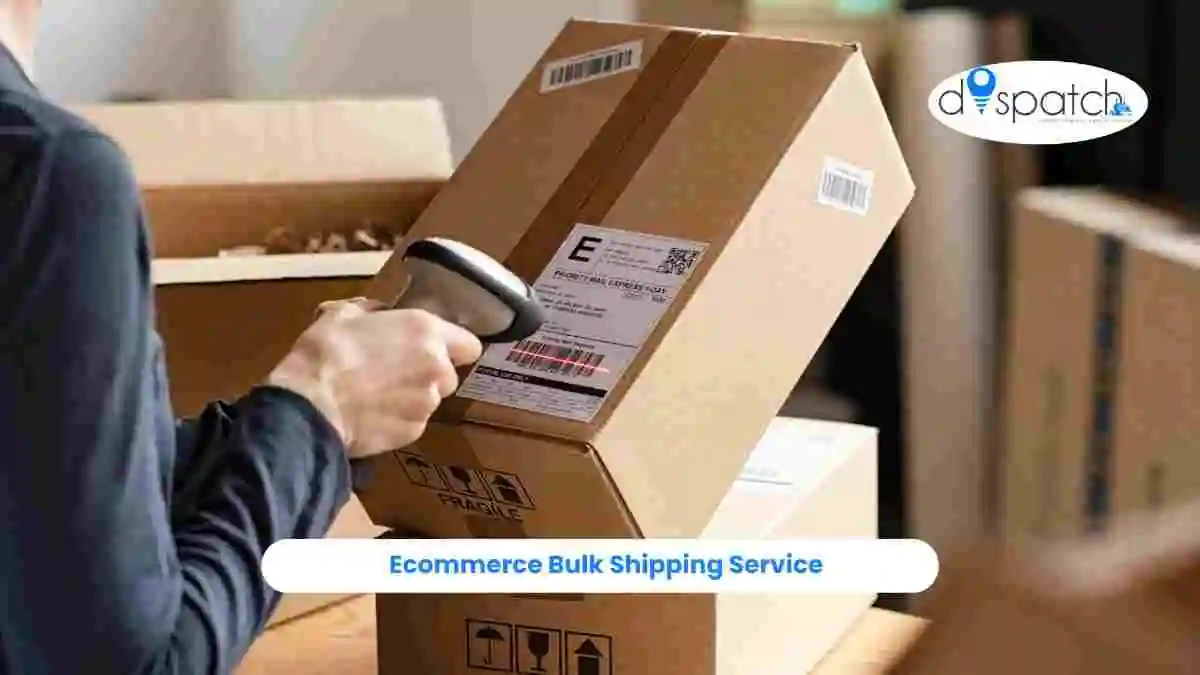
Introduction
Ecommerce has developed into a highly competitive industry where businesses must manage much more than online sales. As order volumes increase, companies need efficient systems for inventory management, packaging, transportation, delivery, returns, and customer communication. For businesses handling dozens, hundreds, or thousands of shipments, managing every parcel individually can become time-consuming and expensive.
This is where an ecommerce bulk shipping service can provide significant value.
Bulk shipping allows ecommerce businesses to consolidate and manage large numbers of shipments through an organized logistics process. Instead of treating every parcel as an isolated shipment, businesses can coordinate orders in batches, streamline warehouse operations, negotiate more efficient shipping arrangements, and improve overall logistics management.
Bulk shipping can be particularly useful for online retailers, manufacturers selling directly to consumers, marketplace sellers, subscription businesses, wholesalers, distributors, and companies experiencing seasonal spikes in ecommerce orders.
As ecommerce continues to grow, customers also expect reliable delivery, accurate tracking, secure packaging, and convenient returns. Businesses therefore need logistics solutions that can handle scale without sacrificing service quality.
An effective bulk shipping strategy can help address these requirements by creating a structured connection between ecommerce platforms, warehouses, shipping systems, and courier networks.
This article explains what an ecommerce bulk shipping service is, how it works, its major benefits, challenges businesses should consider, ways to reduce shipping costs, and best practices for building an efficient bulk fulfillment strategy.
What Is an Ecommerce Bulk Shipping Service?
An ecommerce bulk shipping service is a logistics solution designed to help online businesses process and transport a large number of orders efficiently.
Instead of arranging every shipment manually, businesses can organize multiple orders into batches and process them through a coordinated shipping workflow.
For example, an ecommerce company receiving 500 orders in a single day may need to pick 500 sets of products, package them, generate shipping labels, arrange courier pickup, and track the shipments. A bulk shipping process can organize these activities systematically, helping the business handle the volume with fewer manual steps.
A typical bulk shipping process includes:
Customers place orders through an ecommerce website or marketplace.
Orders are collected in an order management system.
Inventory is allocated to each order.
Orders are grouped into suitable batches.
Products are picked from the warehouse.
Products are packed and labeled.
Shipping information is generated in bulk.
Shipments are handed over to the logistics provider.
Parcels move through the courier network.
Customers receive tracking information.
Delivery performance is monitored.
Returns and undelivered shipments are managed through a defined process.
The exact workflow varies according to business size, product type, warehouse setup, destination, shipping provider, and technology infrastructure.
Why Bulk Shipping Matters for Ecommerce Businesses
Small ecommerce businesses may initially be able to process shipments manually. As order volumes increase, however, manual shipping can become a significant operational burden.
Employees may need to enter customer addresses, print labels, arrange pickups, update tracking information, and reconcile shipping records individually.
This approach can create several problems:
Higher labor requirements
Increased data-entry errors
Slower order processing
Difficult shipment tracking
Higher administrative costs
Missed courier pickups
Poor visibility into logistics performance
Bulk shipping addresses these challenges by organizing large numbers of shipments into a more structured workflow.
For growing ecommerce businesses, this can make it easier to scale order fulfillment without increasing administrative work at the same rate as sales.
Benefits of an Ecommerce Bulk Shipping Service
Lower Shipping Costs
One of the most important benefits of bulk shipping is the potential to reduce logistics costs.
Businesses that consistently ship large volumes may have greater opportunities to negotiate commercial shipping rates with logistics providers. Consolidated shipping arrangements can also improve transportation efficiency.
However, actual savings depend on factors such as shipment volume, package dimensions, weight, destinations, service levels, and negotiated contracts.
Businesses should evaluate the complete logistics cost rather than focusing only on the courier's per-parcel price.
Faster Order Processing
Bulk shipping can make order fulfillment more efficient.
Instead of processing orders one at a time, warehouse teams can group similar tasks together. For example, employees may pick multiple orders in a single warehouse route and then move the products to a centralized packing station.
Shipping labels and documentation can also be generated in batches.
This reduces repetitive work and can help warehouses process large order volumes more quickly.
Better Warehouse Productivity
Warehouse efficiency is critical for ecommerce businesses.
When order volumes increase, poorly organized processes can result in congestion, picking errors, and shipping delays.
Bulk order processing can help warehouse teams establish standardized workflows.
Orders can be sorted by:
Product category
Destination
Shipping service
Order priority
Courier
Package type
Delivery region
Grouping shipments appropriately can reduce unnecessary movement and improve employee productivity.
Easier Shipment Management
Managing hundreds or thousands of individual shipments can become difficult without appropriate technology.
A bulk shipping system can centralize shipment information, making it easier for businesses to monitor order status, shipping labels, tracking numbers, and delivery progress.
This can provide logistics teams with greater visibility.
Improved Customer Experience
Customers may not see the bulk shipping process directly, but they experience its results.
Efficient bulk fulfillment can help businesses process orders faster, reduce errors, and provide tracking information more consistently.
When customers receive the correct product on time and can easily monitor their shipment, overall satisfaction can improve.
Easier Business Scaling
A business may begin with a few dozen daily shipments and eventually grow to several hundred or thousands.
A scalable bulk shipping process can help businesses handle this growth more effectively.
Instead of redesigning the entire logistics operation whenever order volume increases, companies can use standardized workflows and technology to expand their existing system.
How Ecommerce Bulk Shipping Works
Collecting Orders
The first step is gathering orders from ecommerce websites, marketplaces, social commerce platforms, or other sales channels.
An order management system can centralize these orders so warehouse teams have a single source of information.
Verifying Orders
Orders should be checked for payment status, product availability, customer address, shipping method, and other relevant details.
Identifying problems early helps prevent fulfillment delays.
Grouping Orders
Orders can then be grouped according to operational requirements.
For example, a warehouse may create separate batches for different regions or shipping services.
Grouping can make picking and packing more efficient.
Picking Products
Warehouse employees locate the products required for each order.
Depending on the warehouse size, businesses may use manual picking, barcode scanners, warehouse management systems, automated equipment, or a combination of technologies.
Packing Orders
Products are packed according to their size, fragility, and shipping requirements.
Standardized packaging can speed up the process and help control material costs.
Generating Shipping Labels
Bulk shipping systems can generate multiple shipping labels based on customer and shipment data.
Automating this stage reduces repetitive data entry and can help prevent errors.
Courier Handover
Once shipments are packed and labeled, the logistics provider collects the batch.
Large ecommerce businesses may have scheduled pickups designed specifically for their shipping volumes.
Tracking Shipments
Tracking information is generated and can be shared with customers.
Businesses can also monitor shipment performance internally to identify delays or delivery problems.
Delivery and Returns
After delivery, businesses need processes for customer returns, failed deliveries, damaged shipments, and undelivered parcels.
A complete bulk shipping strategy therefore needs to account for reverse logistics as well as forward delivery.
Bulk Shipping and Warehouse Management
Warehouse management is one of the biggest factors determining the success of bulk shipping.
An efficient warehouse should make it easy to locate products, process orders, prepare packages, and move shipments toward the dispatch area.
Inventory should be organized logically, with popular products positioned where they can be accessed quickly.
Warehouse management software can provide real-time visibility into stock levels and order status.
Businesses can also use barcode scanning to reduce picking and packing errors.
For high-volume operations, automation may further improve efficiency. Automated sorting, conveyor systems, scanning equipment, and intelligent warehouse software can reduce manual work and improve throughput.
However, automation should be implemented according to actual business requirements. Smaller businesses may achieve excellent results through process standardization without making significant investments in sophisticated equipment.
The Role of Technology in Bulk Shipping
Technology can transform bulk shipping operations.
An ecommerce business may sell through multiple channels, including its own website, marketplaces, mobile applications, and social commerce platforms. Orders from these channels can be consolidated into a central system.
Technology can then automate several logistics activities.
For example:
Orders can be imported automatically.
Inventory can be synchronized.
Shipping services can be selected based on defined rules.
Labels can be generated in bulk.
Tracking numbers can be assigned automatically.
Customers can receive shipment notifications.
Delivery information can be stored centrally.
Reports can be generated for logistics analysis.
Integration between ecommerce platforms and logistics systems is particularly important for businesses processing large order volumes.
Reducing Shipping Costs With Bulk Operations
Shipping can become one of the largest operating expenses for an ecommerce business.
Bulk shipping provides several opportunities to control costs.
Negotiate Volume-Based Rates
Businesses with consistent shipping volumes may be able to negotiate rates with logistics providers.
The negotiating position can depend on shipment quantity, destinations, package characteristics, and service requirements.
Optimize Packaging
Oversized packages can increase shipping costs.
Businesses should select packaging that protects products without using excessive material or empty space.
Consolidate Shipments Where Appropriate
When operationally practical, shipments headed toward the same region can sometimes be consolidated within the transportation network.
This may improve transportation efficiency.
Analyze Shipping Data
Businesses should regularly review shipping costs by region, product, courier, weight category, and delivery service.
Data can reveal areas where costs are disproportionately high.
For example, a company may discover that certain product categories generate high shipping expenses because of oversized packaging. Redesigning the packaging could then produce long-term savings.
Importance of Packaging in Bulk Shipping
Packaging becomes particularly important when businesses process large shipment volumes.
A small packaging inefficiency can become a significant cost when multiplied across thousands of orders.
For example, an additional packaging material costing a small amount per order may represent a substantial annual expense at high shipment volumes.
Businesses should evaluate:
Package dimensions
Material costs
Product protection
Packing time
Storage requirements
Weight
Sustainability
Courier handling requirements
Standardized packaging can simplify warehouse operations, but different product categories may require different packaging solutions.
Fragile products may require additional protection, while durable products may be suitable for lighter packaging.
Managing Inventory for Bulk Shipping
Inventory planning is closely connected to shipping efficiency.
A business cannot fulfill large volumes of orders efficiently if it frequently runs out of popular products.
Demand forecasting can help businesses anticipate order volumes and maintain sufficient stock.
Inventory should also be distributed appropriately if the business operates multiple warehouses.
For example, storing all high-demand products in one location may increase transportation costs for customers located far away. Distributing inventory strategically can reduce delivery distances and improve shipping speed.
However, excessive inventory distribution can create stock imbalances.
Businesses should therefore use sales data, regional demand, product velocity, and transportation costs when deciding where inventory should be positioned.
Bulk Shipping During Peak Ecommerce Seasons
Seasonal demand can create major logistics challenges.
Sales events, festive periods, holidays, and promotional campaigns can generate significantly higher order volumes than normal.
A business that normally ships 500 orders per day may suddenly need to process several thousand.
Without preparation, this can lead to:
Warehouse congestion
Packing delays
Courier capacity issues
Inventory shortages
Delayed deliveries
Increased customer complaints
Businesses should prepare for peak periods well in advance.
Useful measures include:
Forecasting expected demand.
Increasing warehouse staffing.
Securing additional shipping capacity.
Pre-positioning popular products.
Purchasing sufficient packaging materials.
Testing order and shipping integrations.
Establishing priority workflows.
Communicating realistic delivery timelines.
Bulk shipping systems can be especially valuable during these periods because they allow businesses to process large volumes using standardized workflows.
Choosing the Right Ecommerce Bulk Shipping Service
Selecting a logistics partner requires careful evaluation.
Shipping Coverage
The provider should cover the geographic regions where the ecommerce business sells.
Shipment Capacity
The provider should have sufficient capacity to manage normal and peak shipment volumes.
Tracking
Reliable tracking gives customers and businesses visibility into delivery progress.
Technology Integration
The shipping system should integrate effectively with the ecommerce platform and order management system.
Pickup Reliability
Scheduled pickups need to occur consistently. Missed pickups can disrupt the entire fulfillment cycle.
Service Options
Businesses may require different delivery options, such as standard, express, same-day, or specialized shipping.
Pricing
Pricing should be evaluated based on the total value provided, including service reliability, tracking, support, and operational efficiency.
Customer Support
When a large number of shipments are involved, problems are inevitable. Responsive support can help businesses resolve issues quickly.
Challenges of Ecommerce Bulk Shipping
Managing High Order Volumes
Large order volumes can put pressure on warehouse teams and systems.
Businesses need scalable processes that can accommodate demand fluctuations.
Maintaining Accuracy
The greater the number of shipments, the greater the potential impact of errors.
A single incorrect process can affect hundreds of orders.
Barcode scanning, automated data validation, and standardized workflows can help reduce mistakes.
Handling Different Product Types
Businesses selling a diverse product range may need different packaging and handling processes.
Fragile, oversized, liquid, or unusually shaped products may require specialized shipping arrangements.
Managing Multiple Shipping Partners
Some ecommerce companies use multiple courier providers to improve geographic coverage or optimize costs.
While this can provide flexibility, it also creates additional management complexity.
Technology can help centralize shipment information across different providers.
Returns and Reverse Logistics
Bulk shipping does not eliminate the need to manage returns.
Businesses should establish a clear reverse logistics process for returned, damaged, refused, or undelivered shipments.
Best Practices for Ecommerce Bulk Shipping
Create Standardized Workflows
Standardized processes help employees handle large order volumes consistently.
Every stage should have clearly defined procedures for picking, packing, labeling, dispatch, tracking, and returns.
Automate Repetitive Tasks
Automation can reduce manual work and improve accuracy.
Businesses should identify repetitive processes that can be automated without creating unnecessary complexity.
Monitor Performance Metrics
Key metrics include:
Orders processed per hour
Average fulfillment time
Shipping cost per order
Order accuracy
On-time dispatch rate
On-time delivery rate
Failed delivery rate
Return rate
Customer complaints
Courier performance
Regular monitoring allows businesses to identify bottlenecks.
Maintain Accurate Inventory
Inventory discrepancies can create fulfillment problems.
Businesses should conduct regular stock checks and use systems that provide accurate inventory visibility.
Plan for Peak Demand
Do not wait until order volumes increase to prepare.
Businesses should forecast demand and ensure that warehouse capacity, staffing, packaging supplies, and courier capacity are sufficient.
Provide Accurate Tracking
Customers should receive tracking information as soon as appropriate.
Clear tracking reduces uncertainty and can reduce delivery-related customer service inquiries.
Bulk Shipping for Small and Growing Ecommerce Businesses
Bulk shipping is not limited to very large retailers.
Small and growing ecommerce businesses can also benefit from structured bulk shipping processes.
A business shipping 50 orders per day may not need a highly sophisticated automated warehouse, but it can still use batch processing to improve efficiency.
For example, employees can group orders by product or destination before picking and packing them.
As the business grows, additional technology can be introduced gradually.
This creates a scalable approach where logistics processes evolve alongside sales volume.
Bulk Shipping and Customer Experience
Although bulk shipping is primarily an operational concept, it directly affects customer experience.
Customers expect:
Correct products
Secure packaging
Timely delivery
Accurate tracking
Clear communication
Convenient returns
An efficient bulk shipping process can help businesses meet these expectations consistently.
However, businesses should not sacrifice individual customer needs simply because shipments are being processed in bulk.
Orders still need to be accurately handled at the individual level.
The objective is to achieve operational efficiency while maintaining personalized customer service where required.
Sustainability Considerations in Bulk Shipping
Large shipment volumes can create substantial packaging and transportation impacts.
Businesses can improve efficiency by reducing unnecessary packaging, choosing appropriately sized boxes, minimizing empty space, and optimizing transportation routes.
Packaging materials can also be evaluated based on durability and environmental considerations.
Better logistics efficiency can sometimes support sustainability as well. More efficient transportation and packaging can reduce unnecessary resource use.
Businesses should evaluate sustainability improvements alongside cost, product protection, and operational requirements.
Measuring the Success of Bulk Shipping
Businesses should not assume that bulk shipping is successful simply because more orders are being processed.
Performance should be measured using operational and customer-focused metrics.
Important indicators include:
Fulfillment Speed
How quickly does the business process an order after receiving it?
Order Accuracy
How frequently do customers receive the correct products?
Shipping Cost
What is the average logistics cost per order?
Delivery Performance
How frequently do shipments arrive within the promised delivery window?
Return Rate
Are packaging or fulfillment errors contributing to unnecessary returns?
Customer Satisfaction
Are customers satisfied with the delivery experience?
Courier Performance
Which shipping partners consistently meet service expectations?
By monitoring these indicators, businesses can make data-driven improvements.
How Bulk Shipping Supports Ecommerce Growth
Growth can create operational challenges if logistics processes do not scale with sales.
A business may be excellent at generating orders but struggle to fulfill them efficiently once order volume increases.
Bulk shipping helps create a more scalable fulfillment structure.
With standardized processes, integrated technology, and appropriate logistics partnerships, businesses can increase shipment volumes without necessarily increasing administrative work at the same rate.
This can allow business owners and teams to focus more attention on product development, marketing, customer acquisition, and overall growth.
The Future of Ecommerce Bulk Shipping
Ecommerce logistics is becoming increasingly technology-driven.
Automation, artificial intelligence, data analytics, warehouse management systems, route optimization, and integrated shipping platforms are helping businesses manage larger volumes more efficiently.
The future of bulk shipping is likely to focus on greater visibility and automation.
Businesses will increasingly be able to monitor inventory, order processing, transportation, and delivery performance from integrated systems.
At the same time, customers will continue to expect faster and more transparent delivery.
This means ecommerce businesses will need logistics systems that can combine scale with flexibility.
Conclusion
An ecommerce bulk shipping service can help online businesses manage large shipment volumes more efficiently while improving operational control and supporting growth.
Bulk shipping is not simply about sending many parcels at the same time. It involves creating a coordinated fulfillment system that connects ecommerce orders, inventory, warehouse operations, packaging, courier pickups, transportation, tracking, delivery, and returns.
When implemented effectively, bulk shipping can help businesses reduce operational costs, speed up order processing, improve warehouse productivity, simplify shipment management, and provide customers with a more reliable delivery experience.
The key to success is choosing the right combination of technology, processes, packaging, inventory management, and logistics partners. Businesses should also monitor performance continuously and adjust their strategy as order volumes, customer expectations, and geographic coverage change.
For growing ecommerce companies, efficient shipping is not merely a back-office function. It can directly influence customer satisfaction, profitability, repeat purchases, and long-term competitiveness.
By adopting a structured ecommerce bulk shipping strategy, businesses can build a logistics operation capable of handling today's orders while preparing for tomorrow's growth.
FAQs
Que: What is an ecommerce bulk shipping service?
Ans: An ecommerce bulk shipping service helps online businesses process and transport large numbers of orders efficiently. It typically includes batch order processing, packaging, labeling, courier pickup, tracking, delivery, and return management.
Que: How can bulk shipping reduce ecommerce logistics costs?
Ans: Bulk shipping can help reduce costs through volume-based courier rates, efficient warehouse workflows, optimized packaging, consolidated logistics operations, and better analysis of shipping data. Actual savings depend on shipment volume, weight, destination, and service requirements.
Que: Is bulk shipping suitable for small ecommerce businesses?
Ans: Yes. Small businesses can use basic batch-processing methods to organize shipments more efficiently and gradually introduce automation as their order volumes increase.
Que: What should businesses consider when selecting a bulk shipping provider?
Ans: Businesses should evaluate geographic coverage, shipment capacity, pricing, tracking, technology integration, pickup reliability, service options, customer support, and performance during peak sales periods.
Que: Why is tracking important for bulk ecommerce shipments?
Ans: Tracking gives businesses and customers visibility into shipment progress. It can reduce uncertainty, support customer service, help identify delivery delays, and provide valuable data for evaluating courier performance.