Introduction
Courier services have become an essential part of modern personal and business communication. People send documents, gifts, personal belongings, and parcels, while businesses depend on courier networks to deliver products, samples, documents, and customer orders. As shipping requirements increase, customers are looking for more convenient ways to send packages without making repeated trips to courier offices.
This is where DTDC door pickup can become an important part of the shipping process.
Door pickup allows eligible shipments to be collected from a designated address instead of requiring the sender to personally transport the parcel to a courier center. For individuals, this can save time and effort. For businesses, especially e-commerce sellers, regular pickup can become an important part of their daily fulfillment workflow.
A well-organized pickup process can connect packaging, shipment booking, collection, transportation, tracking, and delivery into a single logistics workflow. Instead of treating courier shipping as a separate task, businesses can incorporate it directly into their order fulfillment process.
However, customers should understand that door pickup availability, booking methods, charges, pickup schedules, and service options can vary depending on the location, shipment type, account arrangement, and applicable courier service.
This comprehensive guide explains DTDC door pickup, how it works, who can benefit from it, how to prepare a shipment, what can affect courier charges, how tracking works, common problems to avoid, and how businesses can build an efficient pickup process.
What Is DTDC Door Pickup?
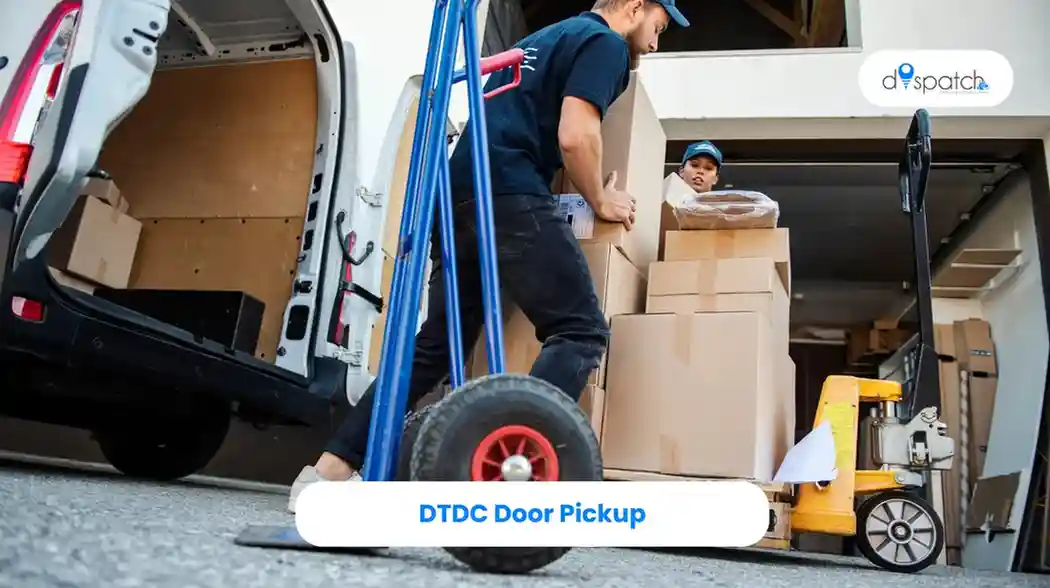
DTDC door pickup refers to a courier collection service through which an eligible shipment can be picked up from a customer's specified location.
Instead of taking the parcel to a courier office, the sender can arrange for the shipment to be collected from a home, office, shop, warehouse, or other eligible address.
The basic process generally follows these stages:
Shipment Preparation → Booking → Pickup Request → Courier Collection → Processing → Transit → Delivery
The exact procedure can differ depending on the service selected and the customer's location.
Door pickup can be especially useful for customers who regularly send shipments or who find it inconvenient to travel to a courier facility.
For businesses, the service can become part of a repeatable shipping routine. For example, an online seller can prepare all orders during the day and have eligible shipments collected from the business premises.
Why Door Pickup Is Important
Convenience is one of the biggest reasons customers choose pickup-based courier services.
Traditional courier shipping may require the sender to:
Pack the parcel.
Travel to a courier location.
Wait for booking or handover.
Submit shipment information.
Return to the workplace or home.
Door pickup can reduce some of these steps by bringing the collection process closer to the sender.
This can be especially valuable for businesses that handle many shipments.
Consider an online store shipping 50 or 100 packages every day. Transporting all those parcels to a courier office would require time, transportation, and employee effort. A pickup arrangement can make the dispatch process more centralized.
Who Can Use DTDC Door Pickup?
Door pickup can be useful for several categories of customers.
Individuals
Individuals may use courier pickup for personal parcels, documents, gifts, and other eligible shipments.
Pickup can be convenient when the sender has limited time or when carrying a package to a courier location is difficult.
Small Businesses
Small businesses often operate with limited staff. A pickup service can reduce the need for employees to make repeated trips to a courier center.
E-Commerce Sellers
Online sellers are among the customers who can benefit most from regular pickup. Products can be packed at the business location and prepared for collection.
Home-Based Businesses
Entrepreneurs operating from home can use pickup services as part of their fulfillment process where available.
Retailers
Retail stores may need to dispatch online orders or business shipments regularly.
Corporate Offices
Companies can use courier pickup for documents, samples, contracts, and other business materials.
How DTDC Door Pickup Works
Although the exact process depends on the applicable service, a typical door pickup workflow includes several stages.
Prepare the Shipment
The first step is to pack the item securely.
The package should be suitable for transportation and handling. Fragile products should have appropriate cushioning, while documents should be protected from bending and moisture.
Collect Shipment Details
The sender should have the required information ready.
This can include:
Sender name
Pickup address
Sender contact number
Recipient name
Delivery address
Recipient contact number
Package weight
Package dimensions
Item description
Shipment value where required
Arrange the Pickup
The sender can use the applicable booking channel or account process to request a pickup.
Pickup availability depends on factors such as location, serviceability, shipment type, and operational arrangements.
Confirm the Information
Before finalizing the booking, the sender should check the pickup address, recipient details, package information, and service requirements.
Keep the Package Ready
The parcel should be completely packed and ready before the courier representative arrives.
Handover
The courier representative collects the shipment according to the applicable pickup process.
Retain Shipment Information
The sender should keep the booking details or tracking reference provided after the shipment is accepted.
Track the Shipment
Once the parcel enters the courier network, the tracking reference can be used to monitor shipment progress.
Benefits of DTDC Door Pickup
There are several potential benefits to using door pickup.
Convenience
The sender does not necessarily need to travel to a courier office for every shipment.
Time Savings
Door pickup can reduce time spent on transportation and physical drop-offs.
Better Business Productivity
Employees can spend more time on packing, inventory, customer service, and other business activities.
Useful for E-Commerce
Online sellers can incorporate pickup into their daily order fulfillment workflow.
Centralized Dispatch
Packages can be prepared and stored at one location until collection.
Easier High-Volume Shipping
Businesses with recurring shipments can develop standardized pickup procedures.
Convenience for Home Businesses
Home-based entrepreneurs can manage shipping without regularly traveling to courier offices.
DTDC Door Pickup for E-Commerce
E-commerce businesses depend heavily on courier logistics.
An online order goes through several stages before reaching the customer.
A typical process is:
Order Received → Inventory Checked → Product Picked → Product Packed → Shipment Booked → Door Pickup → Transportation → Delivery
Door pickup can therefore serve as the connection between the seller's fulfillment operation and the courier network.
For a growing online business, creating a predictable pickup schedule can improve operational efficiency.
For example, a seller may establish a daily process where orders received before a certain cutoff are packed and prepared for pickup. This creates a repeatable system that employees can follow.
DTDC Door Pickup for Small Businesses
Small businesses often have to manage multiple responsibilities with limited resources.
A business owner may be responsible for:
Sales
Marketing
Inventory
Packaging
Customer service
Accounting
Shipping
Making repeated trips to a courier center can take valuable time away from these activities.
Door pickup can simplify the shipping process by allowing employees to focus on preparing shipments while collection is handled as part of the courier workflow.
For businesses with regular shipments, this can become an important productivity improvement.
DTDC Door Pickup for Home-Based Sellers
Home-based businesses have grown significantly with the expansion of online marketplaces and social commerce.
A home-based entrepreneur may receive orders through a website, marketplace, social media platform, or direct customer communication.
Once an order is confirmed, the seller needs to prepare and dispatch the package.
A door pickup process can make this easier:
The customer places an order.
The seller confirms the order.
The product is packed.
Shipping information is prepared.
Pickup is arranged.
Courier collects the parcel.
The customer receives the order.
This can allow a home-based seller to manage fulfillment without making frequent trips outside the home.
Preparing a Parcel for DTDC Door Pickup
Proper packaging is one of the most important parts of courier shipping.
A pickup service makes collection easier, but the sender remains responsible for preparing the shipment appropriately.
Choose Suitable Packaging
The packaging should match the size, weight, and characteristics of the item.
Protect Fragile Products
Fragile goods should be surrounded by appropriate cushioning.
Prevent Movement
The contents should not move excessively inside the box.
Seal the Package
Use suitable packaging tape to securely close the package.
Protect Documents
Documents should be placed in appropriate envelopes or protective packaging.
Label the Shipment
Required shipment information should be clearly displayed.
Check Restrictions
Customers should verify that the item is eligible for transportation and does not fall under applicable prohibited or restricted categories.
Information Required for Door Pickup
Customers should have complete shipment information ready before requesting pickup.
Typical information can include:
Sender Information
Full name
Pickup address
Contact number
Recipient Information
Full name
Complete delivery address
Postal code
Contact number
Shipment Information
Item description
Weight
Dimensions
Number of packages
Declared value where applicable
International shipments may require additional customs-related information and documentation.
Accurate information helps reduce the possibility of processing or delivery issues.
Importance of Accurate Pickup Address
The pickup address is particularly important because the courier representative needs to locate the shipment.
The sender should provide:
Building or house number
Street or road
Locality
City
State
Postal code
Contact information
For businesses located inside office complexes, malls, industrial areas, or large commercial buildings, additional directions may be useful where appropriate.
The sender should also ensure that someone is available to hand over the parcel according to the applicable pickup arrangement.
DTDC Door Pickup and Tracking
Door pickup is only the first stage of the courier journey.
After collection, the shipment may pass through multiple stages before reaching the recipient.
A simplified shipment journey can look like:
Pickup Requested → Pickup Completed → Origin Processing → In Transit → Destination Processing → Out for Delivery → Delivered
Tracking information can provide visibility into this process.
Customers should retain their tracking number or shipment reference after the pickup.
Tracking can be useful for:
Checking shipment progress
Monitoring delivery
Answering customer questions
Identifying delays
Confirming delivery
Maintaining business records
For businesses, tracking is especially important because customers may contact the seller for updates.
Why Tracking Is Important for E-Commerce Businesses
Suppose an online store sends hundreds of orders every month.
Without shipment tracking, the customer service team may have difficulty determining whether an order has been collected, transported, or delivered.
With shipment references, businesses can more easily organize order information and respond to customers.
Tracking can therefore serve two purposes:
Logistics Visibility + Customer Service
Businesses should integrate tracking information into their order management process wherever practical.
DTDC Door Pickup Charges
The cost of courier pickup and delivery can vary depending on several factors.
Potential factors include:
Shipment weight
Package dimensions
Destination
Delivery speed
Shipment type
Pickup location
Number of packages
Business account terms
Additional services
Customers should check the applicable charges for their specific shipment.
A standard price should not be assumed for every parcel because shipping requirements can differ significantly.
What Affects Courier Shipping Costs?
Understanding cost factors can help customers plan their shipping expenses.
Weight
Heavier packages generally require more transportation capacity.
Dimensions
Large packages may be subject to dimensional or volumetric weight calculations depending on the applicable service.
Distance
The destination can influence transportation requirements and pricing.
Delivery Speed
Faster services can have different pricing from standard delivery options.
Shipment Type
Documents, parcels, commercial goods, and specialized shipments may have different requirements.
Additional Services
Optional services or special handling can affect total costs.
How Businesses Can Reduce Door Pickup Shipping Costs
Businesses that send many shipments should monitor shipping costs carefully.
Optimize Packaging
Use appropriately sized packaging without compromising product protection.
Reduce Empty Space
Large boxes with excessive empty space can increase package dimensions.
Analyze Shipment Data
Track shipment costs by destination, package size, and weight.
Reduce Failed Deliveries
Accurate customer addresses can help prevent unsuccessful delivery attempts.
Manage Returns
Returns can create additional shipping costs, so businesses should analyze return patterns.
Select Appropriate Delivery Services
Not every customer order requires the fastest delivery option.
Scheduled Pickup vs. Individual Pickup Requests
Businesses may encounter different pickup arrangements depending on their service setup.
Individual Pickup Requests
This approach can be suitable for customers or businesses with irregular shipping requirements.
A pickup is requested when a shipment needs to be collected.
Regular Pickup
Businesses with consistent shipment volumes may have recurring pickup arrangements.
This can be useful for:
E-commerce sellers
Retailers
Manufacturers
Offices
Distributors
The appropriate arrangement depends on the business's shipment volume and available courier services.
How Businesses Can Organize a Daily Pickup Workflow
A business with frequent shipments should establish a clear process.
Morning: Order Review
Review all orders that need to be shipped.
Product Preparation
Pick products from inventory and verify the order.
Packaging
Pack products according to their requirements.
Shipment Information
Prepare the required courier information.
Pickup Preparation
Keep completed shipments in a dedicated dispatch area.
Courier Handover
Ensure packages are ready when the courier representative arrives.
Tracking
Record tracking references.
Customer Notification
Provide shipment information to customers where appropriate.
This workflow can make daily shipping more predictable.
Common Problems With Door Pickup
Door pickup is convenient, but customers can still encounter operational problems.
Pickup Delay
A pickup may not occur exactly as expected because of operational conditions, traffic, weather, capacity, or other factors.
Incorrect Pickup Address
An incomplete address can make collection difficult.
Parcel Not Ready
If the package is not prepared when the courier representative arrives, the pickup may be unsuccessful or delayed.
Missing Shipment Information
Incomplete information can cause processing problems.
Packaging Problems
Poor packaging can create risks during transportation.
Businesses can reduce these issues by establishing clear internal shipping procedures.
Tips for a Smooth DTDC Door Pickup
Customers can follow several simple practices.
Prepare the Package in Advance
Do not wait until the pickup representative arrives to finish packaging.
Verify the Address
Check the pickup and delivery addresses carefully.
Keep Contact Numbers Available
Make sure the sender and recipient contact information is accurate.
Measure the Shipment
Know the weight and dimensions where required.
Retain Tracking Information
Keep the shipment reference until delivery is complete.
Check Shipping Restrictions
Confirm that the product is eligible for transportation.
Maintain Business Records
Regular shippers should keep records of bookings, tracking references, and delivery status.
DTDC Door Pickup and Business Scalability
Logistics requirements often change as a business grows.
A company may start by shipping a few parcels each week. As sales increase, it may begin processing dozens or hundreds of shipments per day.
At that point, manual shipping processes can become difficult to manage.
Door pickup can support scalability by creating a connection between the company's dispatch process and the courier network.
A growing business can gradually develop:
Manual Shipping → Regular Pickup → Standardized Fulfillment → Shipping Technology → Integrated Logistics
The exact approach depends on the business model, but the underlying principle is to reduce repetitive manual work as shipment volumes increase.
Door Pickup for Retailers
Retailers increasingly sell through multiple channels, including physical stores, websites, marketplaces, and social commerce platforms.
A store may need to send products to:
Online customers
Other branches
Business partners
Suppliers
Repair centers
Customers requesting replacements
Door pickup can help retailers integrate courier shipping into their daily operations.
Instead of requiring employees to leave the store to deliver parcels to a courier center, eligible shipments can be prepared for collection.
Door Pickup for Corporate Offices
Corporate offices frequently send documents and other business materials.
Examples include:
Contracts
Reports
Samples
Official documents
Marketing materials
Equipment
Business correspondence
A regular pickup arrangement can help administrative teams manage recurring courier requirements more efficiently.
Companies can also maintain centralized shipment records to improve internal visibility.
Door Pickup and Reverse Logistics
Courier pickup can also play a role in returns.
For an e-commerce business, a customer may need to return a product to the seller.
A return process may include:
Return Request → Approval → Pickup Arrangement → Product Collection → Transportation → Seller Receipt → Inspection → Refund or Replacement
Efficient reverse logistics can improve customer satisfaction while helping businesses manage returned inventory.
Businesses should monitor return shipments just as carefully as outbound orders.
International Shipments and Door Pickup
International courier shipments require additional planning.
Customers may need to provide information for customs and regulatory purposes.
Potential requirements include:
Product description
Shipment value
Commercial invoice
Country of origin
Import information
Export information
Customs documentation
The exact requirements vary by destination and shipment.
Customers should make sure all information is accurate before arranging an international shipment.
Customs delays can occur when documentation is incomplete, inaccurate, or requires additional review.
Technology and Door Pickup
Technology is making courier logistics increasingly digital.
Businesses can use technology to manage:
Orders
Inventory
Shipping labels
Pickup requests
Tracking references
Delivery information
Returns
Customer notifications
For high-volume sellers, integrating courier processes with e-commerce or order-management systems can reduce manual data entry.
Automation can also help businesses reduce errors and improve shipment visibility.
Customer Experience and Door Pickup
Shipping is a major part of the customer experience for online businesses.
A customer may judge a seller based not only on product quality but also on how smoothly the order is delivered.
Important elements include:
Timely dispatch
Accurate tracking
Safe packaging
Reliable delivery
Clear communication
Simple returns
Door pickup can help sellers move orders into the delivery network efficiently.
However, businesses should remember that pickup is only one part of the overall delivery process.
Safety and Shipping Compliance
Customers should always follow applicable courier rules.
Before arranging pickup, verify that the item is permitted for transportation.
Certain products may be prohibited, restricted, hazardous, fragile, or subject to special handling.
International shipments may also be subject to customs regulations and destination-specific requirements.
Accurate shipment declarations are important. Customers should not intentionally misrepresent the contents, value, or other shipment information.
How to Choose the Right Pickup Arrangement
Businesses should consider several factors when deciding how to manage courier pickup.
Shipping Volume
How many parcels are sent each day or week?
Pickup Location
Is the business operating from a home, office, store, or warehouse?
Shipping Frequency
Are shipments occasional or daily?
Delivery Destinations
Are shipments domestic, regional, or international?
Product Characteristics
Do the products require special packaging or handling?
Customer Expectations
Do customers expect standard or faster delivery?
Tracking Requirements
How much shipment visibility does the business need?
Answering these questions can help businesses develop a more suitable logistics process.
Measuring Pickup and Delivery Performance
Businesses should monitor logistics performance rather than assuming that their shipping process is working efficiently.
Useful metrics can include:
Pickup delays
Average delivery time
On-time delivery rate
Shipping cost per order
Failed delivery rate
Return rate
Damage rate
Customer complaints
Regular analysis can reveal problems.
For example, if many shipments experience failed delivery attempts, the underlying issue may be inaccurate customer addresses rather than courier pickup performance.
Future of Door Pickup Services
Doorstep logistics is likely to remain important as e-commerce and digital commerce continue to expand.
Customers increasingly expect services that minimize unnecessary travel and make shipping more convenient.
Technology may improve:
Pickup scheduling
Route optimization
Shipment visibility
Digital documentation
Automated notifications
Warehouse coordination
Order-to-shipment integration
Businesses will increasingly look for logistics solutions that combine convenience with scalability.
The long-term trend is toward connected logistics, where order management, inventory, courier pickup, tracking, delivery, and returns work together.
Conclusion
DTDC door pickup can provide a convenient way for eligible customers and businesses to move shipments from their homes, offices, shops, warehouses, or other designated locations into the courier network.
For individuals, door pickup can reduce the inconvenience of traveling to a courier office. For small businesses and home-based sellers, it can save time and allow employees or business owners to focus on more important activities. For e-commerce companies, regular pickup can become a core part of an organized fulfillment workflow.
The success of a pickup-based courier process depends on preparation. Customers should pack shipments securely, provide accurate sender and recipient information, verify weight and dimensions where required, check applicable restrictions, and retain shipment tracking information.
Businesses should take a more structured approach by establishing standard procedures for order processing, packaging, pickup preparation, tracking, customer communication, and returns.
Shipping costs should also be monitored carefully. Package weight, dimensions, destination, delivery speed, shipment type, and additional services can all influence the overall cost. Optimizing packaging and reducing failed deliveries can help businesses improve logistics efficiency.
Tracking is another important component. Once a parcel has been collected, shipment visibility helps senders and recipients understand its progress and allows businesses to respond to customer questions.
As digital commerce continues to grow, convenient pickup and delivery services will remain important. Businesses that create organized, scalable, and technology-supported logistics workflows can be better prepared to manage increasing shipment volumes.
Ultimately, DTDC door pickup is not simply about having a courier collect a parcel from a doorstep. It can be part of a broader logistics strategy that connects order fulfillment, packaging, pickup, transportation, tracking, delivery, and returns.
By preparing shipments correctly and developing a consistent shipping process, individuals and businesses can make courier operations more convenient, efficient, and manageable.
Frequently Asked Questions About DTDC Door Pickup
Que: What is DTDC door pickup?
Ans: DTDC door pickup is a courier collection service that allows eligible shipments to be collected from a designated sender location instead of requiring the sender to personally visit a courier office. Pickup availability depends on the location, service, shipment type, and applicable arrangements.
Que: Can I arrange DTDC door pickup from my home?
Ans: Where the applicable pickup service is available, customers may be able to arrange collection from an eligible residential address. The availability and process can vary by location and service, so customers should verify the applicable pickup option before booking.
Que: How should I prepare a parcel for DTDC door pickup?
Ans: Pack the item securely using suitable packaging, protect fragile products with appropriate cushioning, seal the package properly, and ensure the required sender and recipient information is accurate. Check applicable restrictions before handing over the shipment.
Que: How can I track a shipment after DTDC door pickup?
Ans: After the shipment is collected and processed, retain the tracking or shipment reference provided during the booking process. The applicable DTDC tracking facility can then be used to monitor shipment updates.
Que: Is DTDC door pickup useful for e-commerce businesses?
Ans: Yes. Door pickup can be particularly useful for online sellers that regularly dispatch customer orders. It can help businesses prepare shipments at their warehouse, office, store, or other eligible location and integrate courier collection into their daily fulfillment workflow.