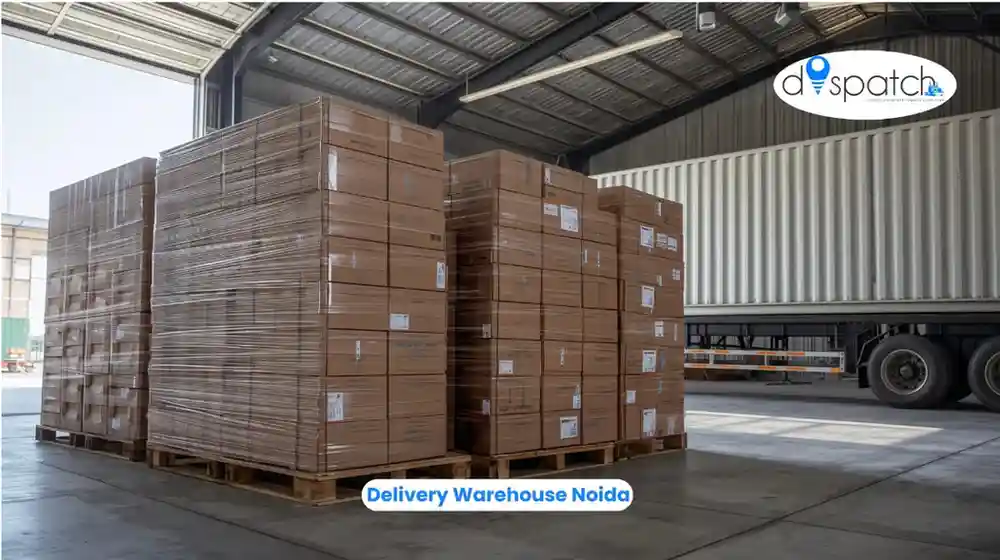
Introduction
Noida has emerged as one of the most important commercial, technology, manufacturing, retail, and e-commerce hubs in the National Capital Region. The city is home to startups, established companies, online sellers, manufacturers, distributors, retailers, and service providers that need dependable logistics infrastructure to move products efficiently.
As businesses expand their customer base, managing inventory and deliveries becomes increasingly complex. Storing products in an organized facility, processing customer orders, packing shipments, coordinating courier pickups, tracking deliveries, and handling returns all require a well-planned logistics system. This is where a delivery warehouse Noida solution can become an important part of business operations.
A modern delivery warehouse is much more than a storage facility. It can function as a centralized fulfillment center where inventory is received, recorded, stored, picked, packed, labeled, dispatched, and prepared for final delivery. For e-commerce businesses, a warehouse can connect online orders with physical inventory and delivery networks.
Noida's location within the NCR also makes it a strategically useful area for businesses that want to serve customers in Noida, Greater Noida, Delhi, Ghaziabad, Gurugram, and other markets. Depending on the warehouse and logistics provider, businesses can use warehousing facilities for local distribution as well as broader domestic fulfillment.
This comprehensive guide explains how delivery warehouses in Noida work, what services they offer, why businesses use them, how they support e-commerce operations, what factors affect warehouse costs, and how to choose an appropriate warehousing and fulfillment solution.
What Is a Delivery Warehouse in Noida?
A delivery warehouse is a facility where products are stored and processed before being distributed to customers, retailers, business partners, or other locations.
A warehouse may perform several activities, including:
Receiving products
Checking incoming inventory
Storing goods
Organizing stock
Managing inventory
Processing orders
Picking products
Packing shipments
Printing shipping labels
Preparing parcels for dispatch
Coordinating courier pickups
Processing returns
Updating inventory records
Supporting shipment tracking
The term delivery warehouse Noida generally describes a warehousing operation located in or serving the Noida market that supports storage and distribution requirements.
For a small online seller, the warehouse might store a limited number of products and process a few orders each day. For a large e-commerce company, the facility could handle thousands of products and a significant number of daily shipments.
The scale may differ, but the basic objective remains the same: maintain organized inventory and move products efficiently from storage to their final destination.
Why Noida Is an Important Warehousing Location
Noida offers several characteristics that make it useful for warehousing and distribution.
Strategic NCR Location
Noida is part of the wider National Capital Region and is connected to several major commercial and residential markets.
Businesses can potentially use a Noida warehouse to serve customers in nearby areas while also connecting with national transportation networks.
Growing E-Commerce Market
Online shopping has created strong demand for fulfillment infrastructure.
E-commerce businesses need locations where inventory can be stored and orders can be processed efficiently.
Business Ecosystem
Noida has a diverse business environment, including technology companies, manufacturing businesses, retailers, service providers, startups, and online sellers.
Each of these businesses may have different warehousing requirements.
Transportation Connectivity
Road connectivity and access to surrounding business areas make Noida relevant for distribution operations.
However, businesses should evaluate the exact warehouse location rather than assuming that every facility offers the same transportation advantages.
Types of Delivery Warehouse Services in Noida
Different businesses require different warehouse solutions.
General Storage
General storage is suitable for businesses that primarily need space to keep inventory.
The warehouse receives products and stores them until the business requires them.
E-Commerce Fulfillment
E-commerce fulfillment involves managing the complete process from receiving an online order to dispatching the product.
This may include:
Order receipt
Inventory confirmation
Product picking
Quality checking
Packing
Labeling
Dispatch
Shipment tracking
Distribution Warehousing
Distribution warehouses focus on moving products toward retailers, business customers, or regional markets.
This can be useful for wholesalers, manufacturers, and distributors.
Third-Party Warehousing
A business may outsource its warehousing requirements to a third-party logistics provider instead of operating its own facility.
This can reduce the need for major investment in warehouse infrastructure.
Returns Processing
Some fulfillment centers also manage reverse logistics.
Returned products are received, inspected, classified, and processed according to the seller's policies.
How a Delivery Warehouse Noida Operation Works
Although warehouse processes vary, a typical fulfillment cycle follows several stages.
Receiving Inventory
Products arrive from manufacturers, suppliers, distributors, or another business location.
Warehouse personnel verify the shipment against the relevant records.
Inventory Recording
The products are entered into the warehouse inventory system.
This establishes a record of how much stock has been received.
Storage
Products are moved to designated shelves, racks, bins, pallets, or other storage locations.
Order Processing
When a customer places an order, the warehouse receives the relevant information.
Picking
Warehouse personnel locate and collect the required products.
Quality Check
The selected products may be checked for quantity, variant, condition, and order accuracy.
Packing
The products are packed using suitable materials.
Shipping Label
The appropriate shipping information is attached to the parcel.
Dispatch
The shipment is handed over to a courier, transporter, or delivery partner.
Tracking
The shipment can then be monitored through available tracking systems.
Delivery
The delivery partner completes the final delivery to the customer.
Returns
If the customer returns the order, the product can come back to the warehouse for inspection and further processing.
Benefits of Using a Delivery Warehouse in Noida
Businesses can benefit from professional warehouse services in several ways.
Better Inventory Organization
A dedicated warehouse can provide structured storage and inventory management.
Faster Order Processing
Warehouse staff can focus specifically on receiving, picking, packing, and dispatching orders.
Scalability
Businesses can increase their order volumes without immediately building their own warehouse.
Reduced Operational Complexity
Outsourcing fulfillment can allow business owners to focus on sales, marketing, customer service, and product development.
Better Shipment Coordination
A warehouse can coordinate with delivery partners to ensure parcels are prepared for collection.
Improved Customer Experience
Efficient fulfillment can help reduce errors and shipment delays.
Delivery Warehouse Noida for E-Commerce Businesses
E-commerce companies are among the biggest users of fulfillment warehouses.
An online business needs to maintain a constant connection between its digital storefront and physical inventory.
Suppose a customer places an order through an online store. The order information needs to reach the fulfillment operation. The warehouse must identify the product, pick it from inventory, pack it correctly, create the necessary shipping information, and hand the package over to a delivery partner.
If any part of this process fails, the customer experience can suffer.
For example, inaccurate inventory records may result in an order being accepted even though the product is unavailable. Poor picking processes may result in the wrong item being shipped. Weak packaging can lead to damage during transportation.
A well-managed warehouse helps reduce these problems through standardized procedures and technology.
Importance of Inventory Management
Inventory management is one of the most important warehouse functions.
Businesses need to know:
How much stock is available
Where products are stored
Which items are reserved
Which orders have been dispatched
Which products have been returned
Which products are damaged
Which products are moving quickly
Which products are moving slowly
Without accurate inventory information, businesses can face several challenges.
Overstocking
Too much inventory can occupy warehouse space and tie up working capital.
Stockouts
Insufficient inventory can result in missed sales.
Overselling
If the online store shows products as available when they are actually out of stock, customers may place orders that cannot be fulfilled.
Inventory Loss
Poor records can make it difficult to identify missing or misplaced products.
Effective inventory management helps businesses maintain better control over their stock.
Role of Warehouse Management Technology
Technology is increasingly important in modern warehouse operations.
Barcode Scanning
Barcode systems can help identify products and reduce manual entry.
Inventory Management Software
Digital inventory systems can track stock quantities and storage locations.
Warehouse Management Systems
A warehouse management system can coordinate receiving, storage, picking, packing, and dispatch.
Order Integration
For e-commerce businesses, integration with online stores or marketplaces can help transfer orders to the fulfillment operation.
Shipment Tracking
Tracking systems provide visibility once shipments enter the delivery network.
Digital Reporting
Businesses can use reports to monitor inventory and fulfillment performance.
Technology does not eliminate the need for trained warehouse staff, but it can make processes more accurate and efficient.
Picking and Packing in a Delivery Warehouse
Picking refers to locating and collecting the products required for an order.
It may appear simple, but picking becomes increasingly complicated as product variety and order volume increase.
An organized warehouse can make picking more efficient by:
Clearly labeling storage locations
Grouping similar products
Positioning fast-moving products strategically
Using barcode scanning
Maintaining accurate inventory records
Packing is equally important.
The package should be suitable for the product and capable of protecting it during normal handling and transportation.
For fragile products, additional protective materials may be required.
For smaller items, appropriately sized packaging can help reduce unnecessary space.
Importance of Packaging
Packaging affects both product safety and logistics efficiency.
Poor packaging can result in:
Product damage
Customer complaints
Returns
Additional shipping costs
Poor customer experience
Overly large packaging can also increase shipping costs depending on how charges are calculated.
Businesses should develop packaging standards based on product characteristics.
For example, fragile items may require cushioning, while clothing or other non-fragile products may need a different packaging approach.
Warehouse Dispatch Management
Once an order is packed, it needs to leave the warehouse.
Dispatch management ensures that shipments are organized and handed over correctly.
Packages may be sorted according to:
Destination
Courier
Delivery service
Shipment priority
Package type
Pickup schedule
An organized dispatch area can reduce the possibility of parcels being misplaced or handed over to the wrong delivery partner.
Role of Courier and Delivery Partners
A warehouse can prepare an order, but the package still needs to travel to the customer.
This makes coordination between warehouses and delivery partners essential.
A warehouse may prepare shipments according to the requirements of different courier services.
Once the parcel is collected, the delivery partner handles transportation and last-mile delivery.
Tracking information can then provide visibility into the shipment's progress.
Businesses should consider the availability of suitable courier services when selecting a warehouse.
Last-Mile Delivery From Noida
Last-mile delivery refers to the final stage of transportation between a logistics facility and the customer.
For businesses serving Noida and nearby markets, warehouse location can influence last-mile operations.
A strategically located warehouse may help reduce the distance between stored inventory and nearby customers.
However, actual delivery performance depends on several factors, including:
Customer location
Traffic
Delivery route
Order processing time
Courier capacity
Weather
Service type
Operational conditions
Therefore, warehouse location should be evaluated alongside the overall logistics network.
Delivery Warehouse Noida for Small Businesses
Small businesses often have limited resources.
An online seller may not want to lease a large warehouse, hire a full warehouse team, purchase inventory software, and establish courier integrations independently.
A third-party warehouse can provide access to these capabilities without requiring the business to build an entire logistics operation.
Small businesses may benefit from:
Flexible storage
Shared warehouse facilities
Order fulfillment
Product packing
Shipment dispatch
Courier coordination
Returns processing
Inventory reporting
This allows the business owner to concentrate on generating sales and serving customers.
Delivery Warehouse Noida for Startups
Startups frequently experience unpredictable growth.
A company may initially receive only a few orders each day and then experience a rapid increase in demand.
Building a large warehouse before demand is established can create unnecessary costs.
A flexible fulfillment solution can allow startups to increase their warehouse requirements as sales grow.
Startups should therefore evaluate whether a warehouse provider can scale with them.
Delivery Warehouse Noida for Large Businesses
Larger companies have different requirements.
They may need:
Large storage capacity
Dedicated warehouse areas
Multiple daily dispatches
Advanced inventory management
Automated systems
High-volume order processing
Multiple delivery partners
Detailed operational reporting
Dedicated support
Large businesses should assess both current capacity and future requirements before selecting a warehouse.
Choosing the Right Warehouse Location in Noida
Not every warehouse location will suit every business.
When evaluating a facility, consider its proximity to:
Major customer markets
Business offices
Suppliers
Transportation routes
Courier facilities
Distribution centers
Manufacturing locations
A warehouse closer to customers may support shorter transportation distances, but rent and operating costs may be higher.
Businesses should calculate the total logistics cost rather than focusing only on monthly warehouse rent.
Factors Affecting Warehouse Costs
Warehouse pricing can vary significantly.
Several factors can influence the overall cost.
Storage Space
The amount of space required affects the cost.
Inventory Volume
Businesses storing large quantities of products may require more capacity.
Storage Duration
Long-term storage can generate different costs from short-term storage.
Order Volume
High order volumes may increase fulfillment and handling requirements.
Picking Charges
Some warehouse providers charge based on the number of items or orders picked.
Packing Charges
Packing services may be priced according to package type or order requirements.
Dispatch Charges
Additional charges may apply for shipment preparation or handling.
Returns
Reverse logistics can create additional receiving and processing costs.
Special Handling
Fragile, oversized, temperature-sensitive, or otherwise specialized goods may require additional infrastructure or handling.
Businesses should request a complete pricing structure before committing to a warehouse provider.
How to Reduce Warehouse Costs
Businesses can improve warehouse economics by optimizing operations.
Maintain Appropriate Inventory Levels
Avoid keeping excessive stock that does not sell regularly.
Improve Product Placement
Place high-demand products in easily accessible locations.
Standardize Packaging
Use appropriate packaging sizes and materials.
Reduce Picking Errors
Barcode scanning and organized storage can reduce mistakes.
Monitor Returns
A high return rate can increase logistics costs.
Analyze Inventory Turnover
Identify products that occupy space without generating sufficient sales.
Use Technology
Digital systems can reduce manual work and improve visibility.
Returns and Reverse Logistics
Returns are a major component of e-commerce fulfillment.
When a customer sends a product back, the warehouse may receive it and perform an inspection.
The product may then be:
Restocked
Sent for repair
Repackaged
Exchanged
Held for quality review
Classified as damaged
The correct process depends on the company's policies.
A well-organized returns process helps prevent returned inventory from disappearing from the stock system.
Importance of Warehouse Security
A warehouse may contain a large amount of valuable inventory.
Security should therefore be an important consideration when selecting a facility.
Possible security measures include:
Controlled access
Surveillance systems
Visitor records
Employee access controls
Inventory reconciliation
Secure storage areas
Fire safety equipment
Emergency procedures
Businesses should understand the security measures used by the warehouse before storing significant quantities of inventory.
Warehouse Safety
Warehouse operations involve people, products, equipment, and movement.
Safe operating procedures can reduce the risk of accidents and product damage.
Businesses should consider whether the warehouse has suitable procedures for:
Product stacking
Material movement
Loading and unloading
Equipment operation
Fire safety
Emergency response
Employee training
A safe warehouse is beneficial for both workers and inventory.
Delivery Warehouse and Customer Experience
Customers may never visit a warehouse, but its performance can strongly influence their shopping experience.
A warehouse that processes orders quickly can help products enter the delivery network sooner.
A warehouse that maintains accurate inventory can reduce cancellations caused by stock shortages.
A warehouse with accurate picking can reduce wrong-item deliveries.
A warehouse with good packaging procedures can reduce transit damage.
Therefore, warehouse operations are closely connected to customer satisfaction.
How to Improve Warehouse Efficiency
Businesses can take several steps to improve warehouse performance.
Organize Storage Locations
Products should have clearly defined locations.
Use Standard Operating Procedures
Receiving, picking, packing, and dispatch should follow consistent processes.
Train Employees
Warehouse workers should understand product handling and technology systems.
Monitor Key Metrics
Businesses should track performance rather than relying only on assumptions.
Review Warehouse Layout
The layout should support efficient movement of people and products.
Use Data
Inventory and order data can help identify bottlenecks.
Important Warehouse Performance Metrics
Businesses can use measurable indicators to evaluate warehouse performance.
Inventory Accuracy
This measures whether recorded stock matches actual physical stock.
Order Accuracy
This shows how often customers receive the correct products.
Picking Accuracy
This measures the accuracy of product selection.
Order Processing Time
This indicates how long it takes to prepare an order for dispatch.
On-Time Dispatch
This measures whether orders leave the warehouse according to schedule.
Return Processing Time
This measures how quickly returned products are processed.
Stock Turnover
This indicates how quickly inventory is being sold and replenished.
These metrics can help businesses identify areas where warehouse operations need improvement.
Delivery Warehouse Noida and Omnichannel Retail
Many modern businesses sell products through several channels.
For example, a company may have:
Its own website
Online marketplaces
Physical stores
Social media sales
Wholesale customers
Corporate customers
Managing inventory across multiple sales channels can be challenging.
A centralized warehouse can help businesses maintain a unified inventory system.
When an order arrives from any channel, the fulfillment operation can allocate the appropriate inventory.
This can reduce confusion and improve stock visibility.
Seasonal Demand and Warehouse Planning
Some businesses experience significant seasonal changes.
Examples include products associated with:
Festivals
Holidays
School seasons
Weather changes
Promotional campaigns
Special events
During peak periods, order volumes can increase dramatically.
A warehouse must have sufficient capacity to receive, store, pick, pack, and dispatch the additional inventory.
Businesses should plan peak-season requirements in advance rather than waiting until demand increases.
Importance of Demand Forecasting
Demand forecasting can help businesses determine how much inventory they are likely to need.
Good forecasting considers factors such as:
Historical sales
Seasonal patterns
Marketing campaigns
New product launches
Market trends
Customer demand
Promotional events
Better forecasting can reduce the risk of both overstocking and stockouts.
How Warehouse Technology Supports E-Commerce Growth
As order volumes increase, manual processes become difficult to manage.
Technology can automate many repetitive activities.
For example, a customer order can automatically enter the warehouse management system.
The system can identify the required product and generate picking instructions.
After packing, shipping information can be generated and linked to the order.
This reduces manual data entry and can improve operational speed.
Delivery Warehouse Noida and Business Expansion
A warehouse can help a business expand into new markets.
An online seller based in Noida may initially serve local customers. As the business grows, it can use warehouse infrastructure to support orders from customers across India.
Instead of building warehouses in every city immediately, a business can work with logistics providers and distribution networks.
This allows the company to focus on its core business while using professional infrastructure for fulfillment.
Common Warehouse Problems Businesses Should Avoid
Several operational issues can reduce warehouse efficiency.
Incorrect Inventory Records
This can lead to stock discrepancies and failed orders.
Poor Storage Organization
Employees may spend too much time searching for products.
Inadequate Packaging
Products may be damaged during transportation.
Incorrect Picking
Customers may receive the wrong product.
Delayed Dispatch
Orders may remain in the warehouse longer than expected.
Poor Return Processing
Returned products may not be properly recorded.
Lack of Performance Monitoring
Businesses may not identify operational problems early.
How to Select a Delivery Warehouse Noida Provider
Choosing a warehouse should be based on business requirements.
Location
Evaluate whether the warehouse is convenient for suppliers and customers.
Capacity
Ensure that sufficient storage space is available.
Fulfillment Services
Determine whether the provider offers receiving, picking, packing, dispatch, and returns.
Technology
Ask about inventory management, barcode scanning, reporting, and integrations.
Courier Connectivity
Check whether the warehouse can work with the delivery partners your business requires.
Security
Review access controls and inventory protection measures.
Pricing
Understand all storage, fulfillment, handling, and additional charges.
Scalability
Make sure the facility can accommodate future business growth.
Customer Support
A responsive support team can make warehouse operations easier to manage.
Questions to Ask Before Choosing a Warehouse
Businesses should ask potential providers specific questions.
For example:
How is inventory recorded?
How often is stock reconciled?
What are the storage charges?
Are picking and packing charged separately?
How are returns handled?
Which delivery partners are supported?
What happens during peak order periods?
How is damaged inventory handled?
What reporting is available?
What security measures are in place?
Can the warehouse scale with growing order volumes?
Clear answers can help businesses avoid unexpected operational problems.
Future of Delivery Warehousing in Noida
Warehousing is likely to become increasingly technology-driven.
The growth of e-commerce, online retail, digital marketplaces, and direct-to-consumer businesses is creating demand for faster and more transparent fulfillment.
Future warehouse operations may increasingly use:
Advanced warehouse management systems
Automated inventory tracking
Robotics
Data-driven demand forecasting
Automated sorting
Digital shipment integration
Smart warehouse layouts
Real-time inventory visibility
However, technology will not eliminate the importance of good warehouse processes.
Accurate receiving, careful product handling, effective packaging, trained staff, and strong operational management will remain essential.
Conclusion
A delivery warehouse Noida solution can provide businesses with an organized infrastructure for storing products, managing inventory, processing customer orders, preparing shipments, coordinating delivery, and handling returns.
For e-commerce companies, a warehouse can act as the bridge between online orders and physical products. Customers place orders digitally, while warehouse teams manage the physical fulfillment process behind the scenes.
The benefits of using a professional warehouse can include better inventory organization, faster order processing, scalable operations, improved dispatch coordination, and reduced operational complexity.
However, businesses should carefully evaluate warehouse providers before selecting one. Location, capacity, pricing, technology, security, fulfillment services, courier connectivity, scalability, and customer support all deserve consideration.
Inventory management should remain a priority because inaccurate stock information can create problems throughout the fulfillment process. Similarly, accurate picking, secure packaging, organized dispatch, and efficient returns handling can contribute to better customer experiences.
Noida's position within the NCR makes it an important market for warehousing and logistics. Businesses can potentially use strategically located warehouse facilities to serve local customers and connect with broader domestic markets.
The right warehouse is not necessarily the largest or cheapest facility. Instead, it is the facility that best matches the company's products, order volume, customer locations, budget, technology requirements, and growth plans.
For small businesses and startups, flexible third-party fulfillment can provide access to professional infrastructure without the cost of building an independent warehouse operation. For larger businesses, dedicated facilities and advanced warehouse management systems may provide the capacity and control required for high-volume operations.
As customer expectations for faster and more reliable delivery continue to increase, warehouse efficiency will remain an important competitive factor. Businesses that maintain accurate inventory, streamline fulfillment, optimize packaging, coordinate effectively with delivery partners, and monitor performance can build a stronger logistics operation.
Ultimately, a delivery warehouse is much more than a place to store products. It is a critical component of the supply chain that connects suppliers, inventory, online orders, delivery networks, and customers.
For businesses operating in or around the NCR, a carefully selected delivery warehouse Noida can provide the infrastructure needed to manage modern fulfillment requirements, support business growth, and create a more consistent customer delivery experience.
Frequently Asked Questions
Que: What is a delivery warehouse in Noida?
Ans: A delivery warehouse in Noida is a facility used to store, manage, process, pack, and dispatch products for delivery. Depending on the provider, it may also offer inventory management, order fulfillment, courier coordination, shipment tracking, and returns processing.
Que: Can e-commerce businesses use a delivery warehouse in Noida?
Ans: Yes. E-commerce businesses can use warehouses in Noida to store inventory and manage customer orders. Fulfillment services may include receiving products, picking, packing, labeling, dispatching orders, coordinating with delivery partners, and processing returns.
Que: What factors affect delivery warehouse costs in Noida?
Ans: Costs can depend on storage space, inventory volume, storage duration, order volume, picking, packing, dispatch, returns, special handling, technology requirements, and other services. Businesses should request a complete pricing structure before choosing a warehouse.
Que: How can I choose the right delivery warehouse in Noida?
Ans: Consider the warehouse's location, storage capacity, security, technology, fulfillment services, courier connectivity, pricing, reporting capabilities, customer support, and scalability. The warehouse should be able to meet both current and future business requirements.
Que: Why is inventory management important in a delivery warehouse?
Ans: Accurate inventory management helps businesses know how much stock is available and where products are located. It can reduce stock discrepancies, prevent overselling, improve order accuracy, and support faster fulfillment and better customer service.